Every December, as markets thin out and inboxes quieten, I perform a ritual that has become one of the most important parts of my investing year. I build my Christmas reading list. Not a list of holiday-fluff beach reads, and certainly not regurgitated investing clichés, but a curated set of books that challenge the way I think.
For me, reading is not an optional extra. It is part of the craft. In a world overflowing with information and starving for insight, deep reading is one of the few remaining sources of genuine edge. Great investors read to upgrade their mental software, not to confirm what they already believe, but to interrogate it. And the Christmas break, when the noise temporarily fades, is the perfect time to take on the kind of long-form thinking that actually shifts the needle.
Over the years, I have learned that markets reward those who understand human nature, incentives, behavioural biases, business models, and complexity. They reward the investor who can step back and see second-order effects, who can distinguish narrative from signal, who can recognise when the market is wrong and have the temperament to act on it. None of these skills come from scrolling social media. They come from sustained engagement with great thinking.
This year’s list reflects exactly that. Serious, contemporary, non-beginner books that expand the aperture of an investor’s mind. Some focus on markets directly; others focus on the psychology, decision-making, and structural thinking required to succeed in markets. All of them matter.
Below is the full list I’ll be taking away with me this holiday period and why each one earns its place.
The Rebel Allocator; Jacob Taylor
At first glance, this book looks like a business novel. But beneath the narrative structure lies one of the best modern texts on capital allocation. We often talk about capital allocation as if it’s a spreadsheet function. In reality, it is the art of judgment, discipline, and incentives. Taylor explores the difference between businesses that simply operate and those that compound capital relentlessly over time.
The most important lesson is this: great companies are built by leaders who understand opportunity cost. They know what to say yes to, but more importantly, they know what to say no to. As investors, identifying those management teams is half the game. This book sharpens that instinct.
The Intelligence Trap; David Robson
Markets punish hubris. They punish overconfidence. They punish cleverness masquerading as insight. Robson’s book is a masterclass in the cognitive blind spots that even highly intelligent people routinely fall into.
For investors, this book is almost a mirror. It forces you to confront the uncomfortable truth: intelligence and good judgment are not the same thing. Robson explores why experts get trapped by their own mental rigidity and how to build cognitive flexibility, the trait that sits at the core of second-level thinking.
In markets where consensus narratives dominate, the investor who can step outside their own thinking patterns gains a profound advantage.
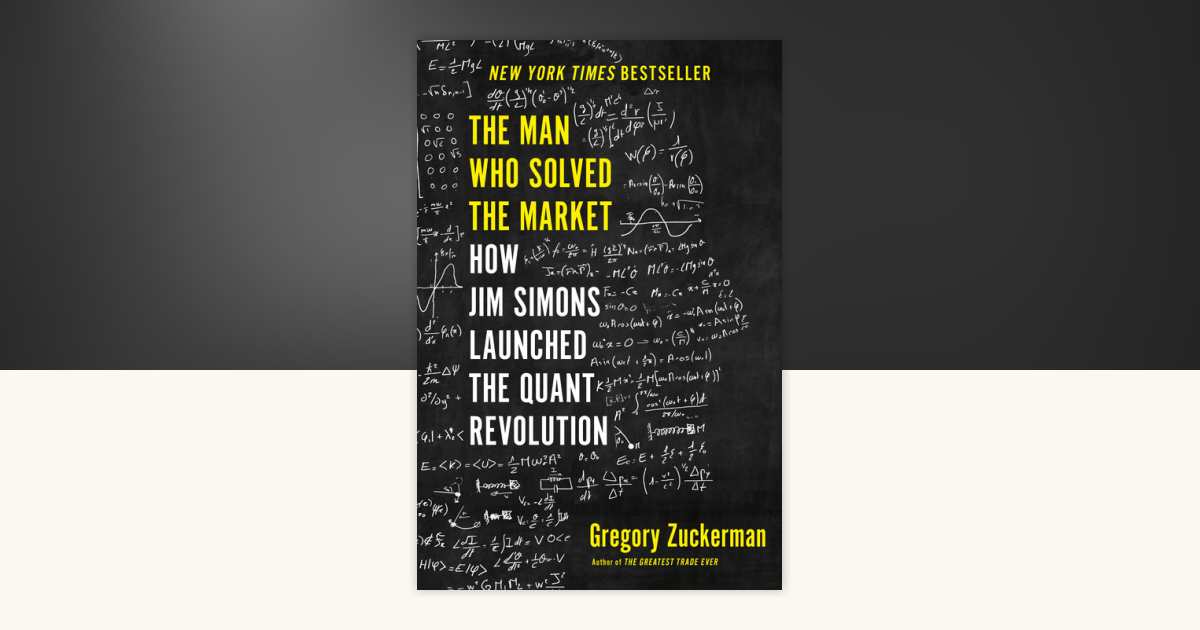
The Man Who Solved the Market; Gregory Zuckerman
Jim Simons’ story is well known, but Zuckerman’s telling captures the essence of what Renaissance Technologies actually accomplished. Not just outsized returns, but a new model of investing built on discipline, iteration, feedback loops, and the willingness to challenge every assumption.
For discretionary investors, the lesson isn’t to become quants. The lesson is to appreciate structure, process, relentless improvement, and the humility to test rather than assume. Renaissance succeeded because its culture rewarded learning over ego. That principle applies in any investment strategy.
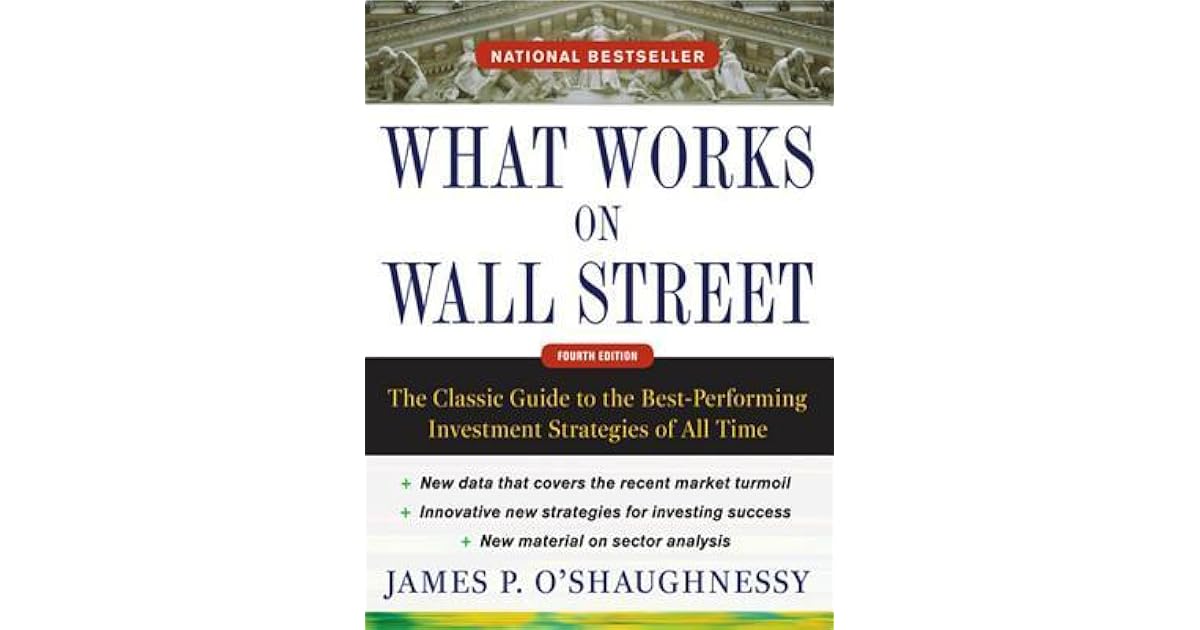
What Works on Wall Street; Jim O’Shaughnessy
The latest edition of this book is a data-rich examination of what actually works in markets over long periods. It’s not about passive indexing. It is active investing with structure and evidence.
Modern markets are noisy. Narratives dominate. Social media amplifies bold claims. Backtests are misused. This book cuts through all of that by grounding investment ideas in decades of real-world data. It reinforces the power of rules-based thinking while acknowledging behavioural realities.
If you want a framework for assessing whether an investment idea has empirical legs or is just a story, this is essential reading.
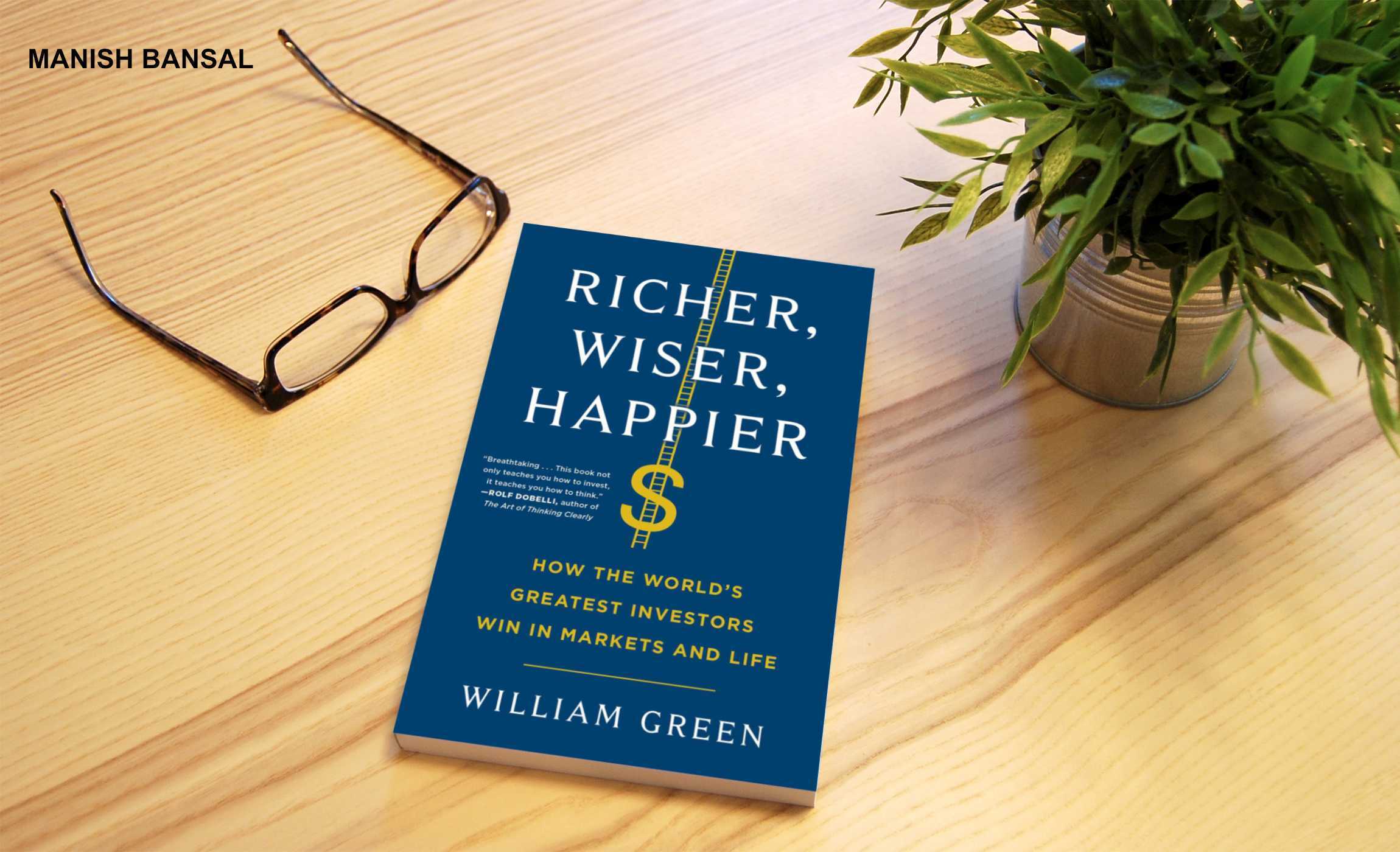
Richer, Wiser, Happier; William Green
This is not an investing handbook. It is a psychological and philosophical study of the world’s wisest investors, not just how they allocate capital, but how they live, think, absorb uncertainty, and manage themselves.
The central insight is that temperament overrides tactics. You can know every valuation model under the sun, but if you cannot manage your emotions, stay patient, or recognise your own biases, you will never outperform.
Green’s interviews with investors like Gayner, Pabrai, Templeton, and Simons offer a rare behind-the-veil view of how elite performers see the world.
For any investor aiming for longevity, this is required reading.
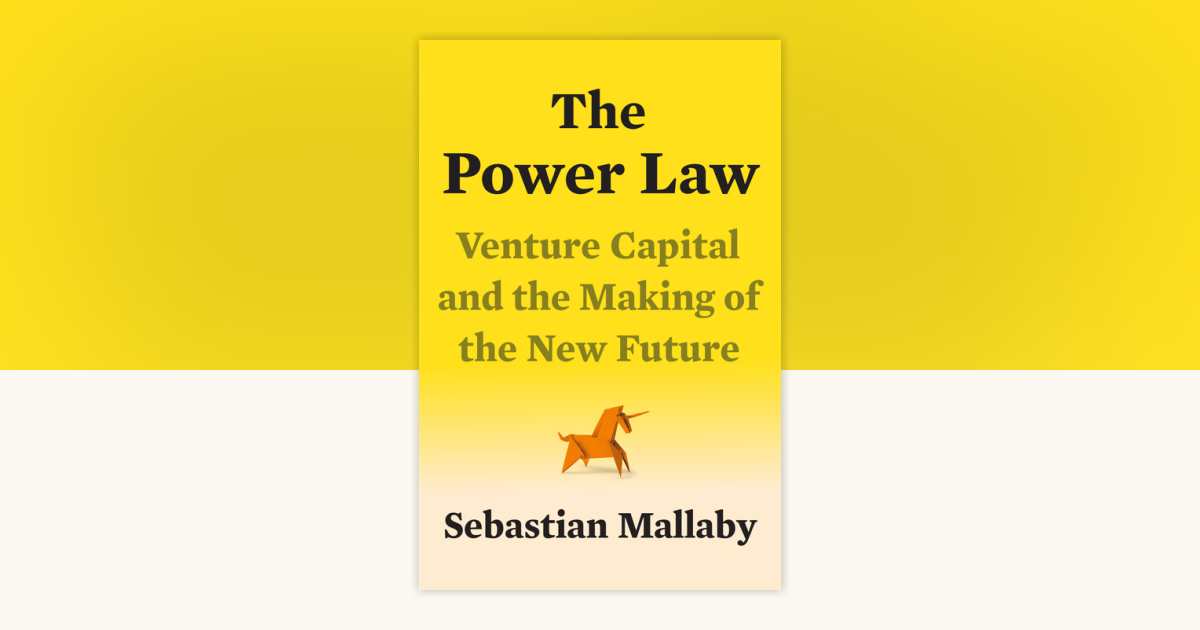
The Power Law; Sebastian Mallaby
Although this book focuses on venture capital, its lessons extend far beyond Silicon Valley. Mallaby unpacks one of the most important ideas in modern markets: the power law distribution.
A small number of extreme winners account for the vast majority of returns. The same pattern appears in start-ups, public markets, innovation cycles, and even economic productivity.
Understanding this distribution shapes how we think about portfolio construction, asymmetric payoffs, risk-taking, and optionality. Recognising what could be a 10x or 20x outcome and not selling too early is as important as good stock selection.
More Money Than God; Sebastian Mallaby
Mallaby’s earlier work explores the rise of the hedge fund industry; macro, quant, event-driven, and long/short pioneers who broke the mould of conventional investing. Each chapter is a study in contrarian thinking.
From Soros’s reflexivity to Druckenmiller’s intuition to Steinhardt’s intensity, Mallaby shows what it means to operate at the highest levels of active management.
The lesson for modern investors is that edge comes from perspective. These investors saw what others missed because they thought differently, not because they had better access or bigger teams.
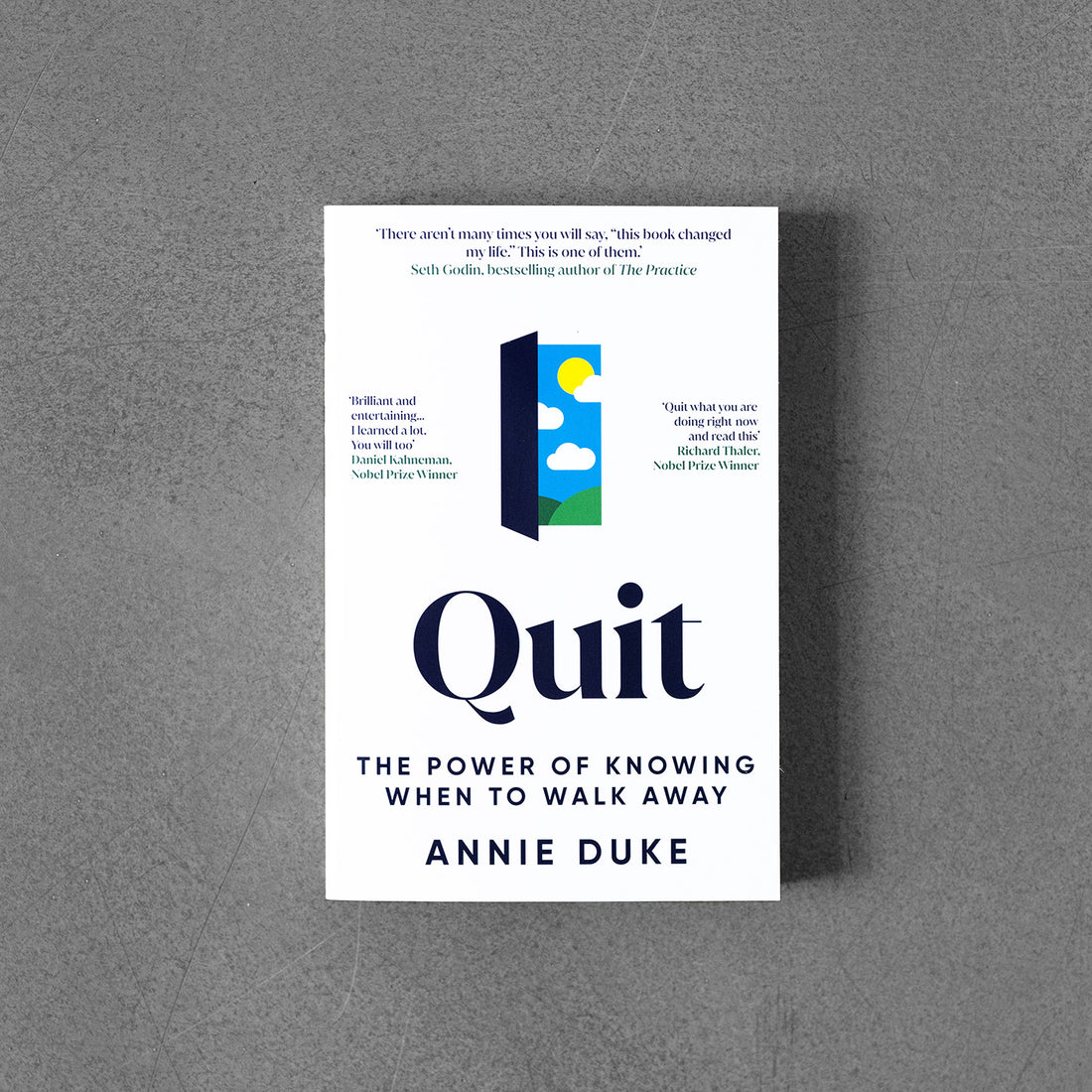
Quit: The Power of Knowing When to Walk Away; Annie Duke
One of the hardest skills in investing is not buying. It is quitting. Cutting losses early, exiting when the thesis breaks, reallocating when the opportunity set shifts, these are the decisions that define long-term returns.
Duke, a former poker champion, explains why humans struggle to quit even when evidence tells us we should. She breaks down sunk-cost bias, identity attachment, escalation of commitment, and the psychological difficulty of abandoning a position you’ve championed.
This is not a book about poker. It is a book about capital preservation, opportunity cost, and emotional discipline, the heart of great investing.
The Art of Doing Science and Engineering; Richard Hamming
Every investor should read at least one book each year that has nothing directly to do with investing. This is mine.
Hamming’s work is a study in how serious thinkers approach complex problems. He explores how to identify important questions, build mental models, test assumptions, and avoid intellectual stagnation. These are the meta-skills of great investors. The ability to think clearly is the ultimate edge.
Why These Books Matter for Investors Today
Markets today are characterised by noise, volatility, narrative dominance, and short-termism. The biggest challenge isn’t finding information. It’s separating insight from distraction.
Deep reading helps investors:
slow down the mind
build second-order thinking
see patterns others overlook
improve self-awareness and emotional regulation
challenge their own assumptions
identify genuine opportunities amid chaos
Reading is a form of mental strength training. You don’t see the improvement immediately, but the compounding effect is enormous. Just as the best athletes maintain rituals that sharpen their bodies and minds, great investors maintain rituals that sharpen their thinking. Reading is one of them. This list is not about entertainment. It is about preparation. Preparation for uncertainty, complexity, and inflection points, exactly the conditions where exceptional returns are made. As I pack these books into my carry-on (okay maybe into the big suitcase), I know I’m not packing pages. I’m packing next year’s insights.
TAMIM Takeaway
Great investing isn’t just about analysing companies. It’s about analysing yourself. Your thinking, your biases, your process, your blind spots. This reading list is designed to upgrade the mental operating system that drives every investment decision you make. If you want better returns next year, start by upgrading the way you think this year.
Investors adore narratives that offer emotional comfort. “AI will save us”, “recession is cancelled”, “central banks have everything under control”, and other fairytales that make market commentators feel clever. The inconvenient truth is that markets rarely deliver the outcomes that dominate headlines. Instead, the real drivers of return tend to come from slow, structural shifts that most people ignore because they lack the excitement of the latest bubble.
Three such shifts are now underway. Energy investment is rising again after a decade of starvation. Japanese financial conditions are normalising after thirty years of distortion. And the global manufacturing base that will power the AI boom is moving into a more rational, more profitable phase. None of this fits neatly into the noise that occupies most financial media, but all of it matters if you want to make money rather than simply participate in debates about the Federal Reserve or the ten stocks that dominate the Nasdaq.
Today we examine three companies that exemplify these turning cycles: Schlumberger in global energy services, Mizuho Financial Group in Japanese banking, and Jabil in advanced manufacturing for AI and infrastructure. They are large, liquid, profitable, and still reasonably valued. More importantly, they are priced for the world that existed five years ago, not the world that is emerging now.
Investing is not about predicting the next headline. It is about positioning yourself where capital is starting to flow, not where it has already arrived. The following companies sit precisely at that inflection point.
Schlumberger: The Unfashionable Energy Giant That Never Went Away
You would not know it from the behaviour of climate aspirants on social media, but the world still relies on oil and gas for the vast majority of its energy needs. Not because we lack the technology for alternatives, but because reality does not bend to ideology. It takes decades to transform energy systems. Politicians and some asset managers may pretend otherwise, but companies like Schlumberger operate in the real world, where physics and engineering still matter.
Schlumberger, the largest technology and services provider to the energy sector, has been quietly compounding value as the world wakes up to its multi year underinvestment in supply. The company’s revenue profile tells the story. Over the past several years, growth has been steady and broad based, with EBITDA margins expanding into the mid twenties. This is notable given that the sector still trades as if we are permanently returning to 2020 conditions.
Financial conservatism has been a strength. Schlumberger generates high returns on capital, maintains disciplined debt management, and continues to invest in digital and automation technologies that make production cheaper and more efficient. It is fashionable to believe that the future belongs exclusively to wind turbines and rooftop solar. But the companies actually enabling the global economy to function are the ones who keep energy secure while the transition plods along far more slowly than idealists expected.
Valuation remains reasonable. Earnings for next year imply a mid teens price to cash flow multiple and a dividend yield comfortably above three percent. Investors who still view the sector through the lens of a single bad year are missing the structural reality. Countries are scrambling to secure long term energy supplies. Offshore drilling is returning as a growth engine. National oil companies are ramping capex. The service cycle, which lags commodity prices by one or two years, is firmly in recovery.
Schlumberger is not the perfect stock. Few are. But as a levered play on a multi year need for more reliable energy supply, it remains compelling. The best opportunities often arise when the public narrative is stuck in a fantasy while the underlying economics grind forward.
Mizuho Financial Group: Japan Finally Wakes Up From Its Monetary Coma
Japan has spent three decades fighting the laws of economic gravity. When you peg interest rates at zero for long enough, you destroy the natural functioning of credit markets. When you buy most of your own government bond market through your central bank, you distort pricing to the point where investors stop bothering to look. And when you artificially depress risk free rates for generations, you punish savers, banks, insurers, and pension funds.
Eventually, however, even the Bank of Japan must acknowledge reality. Inflation has reappeared. Wages are rising. Corporate governance reforms are accelerating. And perhaps most importantly for investors, the yield curve is beginning to steepen. This environment is oxygen for the megabanks.
Mizuho Financial Group is one of the key beneficiaries. It is large, liquid, conservatively managed, and uniquely positioned for rising net interest margins. After years of depressed profitability, earnings have surged. Revenue grew nearly twenty five percent in the latest financial year, while net income expanded at an even faster pace. The capital position is robust, with a tier one ratio above sixteen percent. Japanese banks, long dismissed as yield traps, are suddenly becoming income generating assets again.
The market has been slow to adjust to this new environment. Most global investors still associate Japanese banks with the stagnation era. They have not updated their mental models to reflect the fact that Japan is now one of the few developed countries with genuine monetary normalisation ahead rather than behind. The repricing of the banking sector is only in its early stages.
Mizuho trades at just over one times book value. For a bank with rising margins, improving credit quality, and strong capital, this is hardly demanding. The investor psychology that labelled the sector uninvestable for decades has not yet caught up with the numbers. While everyone debates American technology stocks, the most interesting monetary shift in the developed world is happening in Tokyo.
Investors should pay attention. Structural change, not headlines, drives long term returns.
Jabil: The Quiet Architect of the AI Industrial Build Out
It is extraordinary how quickly investors have convinced themselves that artificial intelligence will eliminate the business cycle and usher in a permanent era of growth. The hype machines of Silicon Valley have always been powerful, but they appear to have reached a new level of narrative engineering. What is often ignored is the unglamorous machinery required to turn AI from a concept into a commercially scaled reality: optical components, precision sensors, networking equipment, industrial controllers, power regulation systems, thermal management, and manufacturing at enormous volumes.
Jabil is one of the companies doing the actual work. Unlike the promotional darlings of the Nasdaq, Jabil does not spend its time producing glossy slide decks about the future of consciousness. It builds things. The company is one of the world’s leading contract manufacturers in high complexity electronics, serving data centres, cloud infrastructure, industrial robotics, medical devices, and advanced communications systems.
Revenue has been stable and rising. Margins have held firm. The balance sheet is disciplined, and earnings are set to expand materially over the next two years as new capacity comes online for hyperscalers, network operators, and industrial automation clients. Institutional ownership is extremely high, which tells you where the serious money sits compared with the tourists who chase momentum.
Valuation is attractive relative to the growth profile. Jabil trades on under twenty times next year’s earnings despite being a direct beneficiary of the physical build out behind AI. While markets obsess about the software layer, the real economic value is often captured by companies like Jabil who enable the hardware, logistics, and engineering required to scale these systems.
It is worth remembering that in every technological revolution, the early winners are usually the tool and equipment providers. They capture value while the platform companies fight one another in a series of expensive, low return arms races. Many investors appear to have forgotten this. Jabil has not.
The Common Thread: Capital Is Quietly Rotating Back to Reality
Schlumberger, Mizuho, and Jabil operate in very different industries. Yet they share three attributes that matter greatly for long term investors.
First, they sit in sectors where capital investment is rising after years of deprioritisation. Whether it is global energy, Japanese credit markets, or industrial manufacturing for AI infrastructure, these are industries coming off long periods of underinvestment.
Second, they exhibit improving financial quality at reasonable valuations. Earnings are growing, margins are expanding or stable, and balance sheets are not overstretched. This is unusual in a market where many popular companies trade on heroic assumptions about the future.
Third, they reflect the gradual return of economic realism. Energy demand is not vanishing. Monetary policy is normalising in places long thought incapable of change. And the hardware backbone of AI requires years of disciplined engineering rather than marketing slogans.
Investors who anchor their thinking to last decade’s narrative risk missing this shift. Capital is moving back to industries with tangible assets, real cash flow, and genuine demand. The world is quietly repricing.
TAMIM Takeaway
Do not confuse popularity with opportunity. The best returns often come from sectors investors have ignored for too long. Energy services, Japanese banking, and industrial technology may lack the glamour of the Nasdaq, but they possess something far more valuable: improving fundamentals at reasonable prices.
When cycles turn, they tend to run for years. Schlumberger, Mizuho, and Jabil each represent a structural rotation that is still in its early stages. The market will catch on eventually. Better to be positioned before the crowd arrives.
Disclaimer: Schlumberger (NYSE.SLB), Mizuho Financial Group (TYO: MFG), and Jabil (NYSE: JBL) are held in TAMIM Portfolios as at date of article publication. Holdings can change substantially at any given time.
This week’s TAMIM Reading List explores risk, influence and disruption across finance, geopolitics and daily life. Scammers are hijacking rental listings and impersonating real estate agents, revealing just how exposed the housing market has become in the age of social media. Elon Musk’s proposed $1 trillion pay package reignites debate over corporate governance and the competition among U.S. states to weaken oversight. We examine the “slop cycle” that emerges with every major media revolution, along with the factors driving a sharp rise in car insurance premiums. Geopolitical pressure builds as the U.S. positions a carrier near Venezuela, while China’s purchase of an insurer tied to CIA personnel raises national security questions. Rounding out the list is Channel 7’s Mark Ferguson, who has sold his NSW livestock estate for $8.5 million.
There are moments in markets when noise becomes deafening and investors search for a signal that cuts through it. Warren Buffett’s final shareholder letter does exactly that. It is part memoir, part reflection, and part masterclass in how to think about investing over an entire lifetime. It is wise, generous, and occasionally very blunt. He reminds us that the most powerful force in investing is not analytics, models, or brilliance. It is character.
In reading his final message, I kept returning to a simple truth that is easy to forget in an age obsessed with shortcuts. Over the long run, character beats intelligence. Values beat tactics. Behaviour beats forecasts. Buffett’s letter is not a technical document, it is a philosophy of life that quietly explains why he succeeded so spectacularly and why most investors do not.
This newsletter explores the idea that character is the real competitive advantage in investing. If we learn nothing else from Buffett’s final words, we should learn this.
The Foundation of an Investor is Character
Most investors believe their edge comes from information or speed or cleverness. They think returns flow from knowing something others do not. Buffett’s entire career argues the opposite. He shows that returns come from patience, honesty, humility, and discipline.
The market constantly invites emotional behaviour. It tempts you to chase what is up, panic when prices fall, compare yourself to peers, envy success stories, fear missing out, or justify decisions because others are doing the same. Buffett rejected all of this. He saw markets as they are, not as he wished them to be, and then he behaved in a way that gave him the best probability of compounding over decades.
His final letter reminds us that investing is not a contest of brains. It is a test of temperament. The strongest portfolio is one built on behaviour that does not change when markets do.
Buffett calls attention to the destructive power of envy. He points out that as CEO pay became more visible, it did not encourage moderation. It encouraged escalation. Instead of competing on performance, executives compared compensation. This same tendency appears among investors. When markets create short term winners, others feel compelled to replicate the same behaviours even if they contradict sound judgement.
Character is the antidote. It protects investors from themselves.
Why Humility Is the Most Underrated Investment Skill
Humility is rarely discussed in financial circles because it sounds like softness. Buffett demonstrates the opposite. Humility is a strength because it allows an investor to acknowledge uncertainty, embrace mistakes, and accept that the future is inherently unpredictable.
Buffett openly admits that his life has been shaped by luck. He acknowledges being born in the right country, with the right health, at the right time. He acknowledges mistakes and misjudgments across decades. He acknowledges that he should have acted faster in situations where leaders suffered from declining capacity. Most investors and executives never admit such things.
Humility gives an investor flexibility. It allows one to change their mind when the facts change. It keeps ego from interfering with rational decision making. Most importantly, humility protects investors from the illusion that intelligence alone guarantees results.
Buffett writes that the second half of his life was better than the first because he learned to behave better. That is an extraordinary statement. It reinforces the idea that character is not fixed. It is something investors can build deliberately.
The Discipline to Avoid Stupidity Is More Valuable Than the Ability to Be Brilliant
Buffett makes a subtle but profound point. Berkshire succeeded because it avoided disaster. Not because it found every winning idea, but because it refused to take existential risks. This behaviour is rooted in character.
Many investors believe outperformance comes from superior forecasts. Buffett believes outperformance comes from avoiding catastrophic mistakes. His philosophy is one of survival. If you can stay in the game long enough, you will eventually experience compounding. If you expose your portfolio to permanent loss, you will never see compounding at all.
This is deeply relevant for investors today. Markets will always contain unknown shocks. Prices will always fluctuate. A portfolio that can survive volatility without emotional decision making is stronger than one that relies on constant precision.
Character is what keeps an investor from getting carried away in good times or destroyed in bad ones.
The Kind of Leaders Worth Following
Buffett’s final letter is filled with stories of people who shaped him. Charlie Munger, Don Keough, Walter Scott, and others who influenced Berkshire’s culture. The common thread between them is not brilliance, although they were all smart. The common thread is values.
They were honest. They were rational. They were loyal. They were calm under pressure. They were teachers. They acted in a way that built trust.
Buffett has always believed that the most valuable skill in leadership is integrity. A leader who is driven by ego, envy, or personal glory is dangerous. A leader who sees themselves as a steward rather than an owner creates long term value.
Investors spend enormous time analysing financial statements. Very few spend equal time analysing character. Buffett argues that is a mistake. The long term trajectory of a business is determined by the ethics, discipline, and temperament of its leaders.
If you want to know whether a company will treat shareholders fairly, you must first ask whether its leaders behave fairly with others. Character is not selective.
Why Behaviour Outperforms Strategy
Every investment strategy works at times and struggles at times. Markets change, cycles shift, and what once looked brilliant may later appear misguided. However, the behaviour of an investor can remain stable across every cycle.
Behaviour is permanent. Strategy is temporary.
Buffett’s behaviour remained constant for more than sixty years because it was grounded in values. He valued consistency, transparency, simplicity, and partnership. He did not chase fashion. He did not try to impress. He did not overcomplicate. He let the mathematics of compounding do the heavy lifting.
Modern investors often drift from strategy to strategy searching for superior methods. Buffett shows that the real advantage is not the strategy itself, but the consistency with which you stick to it.
Character creates consistency. Consistency creates compounding. Compounding creates wealth. It is simple, but not easy.
The Role of Trust in Long Term Compounding
One of the most important insights in Buffett’s final letter is that trust is an economic asset. Berkshire’s structure depends on trusting managers to run their businesses without interference. Berkshire’s shareholders trust that management will run the company for their benefit, not for personal gain.
Trust lowers friction. It reduces the need for oversight, bureaucracy, and micromanagement. Trust accelerates decision making and empowers smart people to act quickly. Trust keeps shareholders aligned with management even during difficult periods.
Investors sometimes underestimate how costly distrust can be. When corporate leaders cut corners, act inconsistently, or pursue self serving behaviour, the resulting damage compounds just as powerfully as good behaviour does. Distrust is expensive.
Buffett’s career demonstrates that long term compounding thrives in environments where trust is earned and maintained through character. Investors should seek companies and fund managers who behave consistently with their stated principles.
Why the Best Investors Choose Their Heroes Carefully
Buffett ends his letter with one of his most important lessons. He urges readers to choose their heroes carefully and then emulate them. He believes that copying the behaviour of the right people is the fastest way to improve your own behaviour.
Investing is not just an intellectual activity. It is an apprenticeship in patience, temperament, and decision making. Buffett learned from Ben Graham. Munger sharpened his thinking. Tom Murphy inspired his leadership philosophy. Each shaped him not through theory, but through example.
The message is clear. The quality of your behaviour is heavily influenced by the people you admire. If you choose heroes who prioritise ethics, humility, discipline, and rationality, those traits become your own.
Investors should therefore be intentional about who they learn from. In markets filled with bravado and noise, role models matter more than we acknowledge.
Why Geography Never Limited Great Thinking
One of the most surprising themes in Buffett’s letter is how many extraordinary people lived within a few blocks of him in Omaha. This is not an argument for geography. It is a reminder that wisdom can come from anywhere and that humility keeps us open to the possibility that great ideas and great people live outside traditional financial centres.
Buffett did not need Wall Street to think clearly. He did not need glamour to feel smart. He believed clarity came from quiet thinking, not constant stimulation. Omaha was not an accident. It was a deliberate environment that protected him from distractions.
The investor lesson here is simple. You do not need to chase the loudest voices. You need to build an environment that supports good decision making. Stillness is underrated.
Character and the Australian Investor
Buffett’s insights are timeless, but they carry special weight for Australian investors navigating constant volatility, media noise, and the temptation to chase short term results.
The Australian market rewards discipline. It rewards rational analysis. It rewards staying invested through cycles. It rewards investors who avoid permanent loss and focus on compounding.
More importantly, it rewards investors who treat investing as a behavioural discipline. That means avoiding envy, practising humility, rejecting impulsiveness, and committing to long term thinking.
The best portfolio in the world is useless if the investor controlling it cannot maintain consistent behaviour.
The Tamim Takeaway
The deeper lesson from Buffett’s final shareholder letter is that great investing is not a function of genius but a function of character. The behaviours that create exceptional long term results are available to everyone. They require no special intelligence, no secret information, and no shortcuts.
They require patience. They require humility. They require trust. They require discipline. They require self awareness. They require consistency over decades.
Character is not just a moral principle. It is a financial advantage. It is the foundation upon which compounding is built. When investors master their behaviour, they master the single greatest driver of lifetime returns.
That is the legacy Buffett leaves. And it is a legacy worth adopting.
In every cycle, there are companies that make a lot of noise and companies that quietly get on with the job. The first group tends to attract the headlines. The second group tends to generate the returns. The current market, with its shifting macro signals and sharp swings in investor sentiment, has created an environment where real operational excellence is easy to overlook in favour of whatever story happens to dominate the day.
Yet it is precisely during these periods that long term investors should be paying attention to businesses that are improving their earnings quality, strengthening their competitive positions, and gaining momentum in their industries. Today we highlight three such companies. Each is executing well. Each has multi year growth drivers. Each trades on valuations that remain attractive relative to the scale of their opportunity. And importantly, each represents a different kind of structural change taking place across the Australian small cap landscape.
Edu Holdings, Credit Clear, and Austco Healthcare operate in entirely different industries. However, they share similar characteristics. They are disciplined operators. They benefit from sectors undergoing meaningful shifts. They are run by management teams with clear strategies. And they are building earnings streams that have the potential to look materially higher in the next two to three years. These are the types of companies that reward patient investors.
Let us walk through each business and explore why their trajectories matter and what makes them worth following closely.
Edu Holdings, A Regulatory Reset Meets Genuine Operating Momentum
There are times in investing when good operational execution coincides with positive structural change. Edu Holdings (ASX: EDU) is one of those examples. The company has delivered consistently strong performance across both of its key education divisions, Ikon and ALG. This is impressive on its own, but the more interesting story is the broader industry backdrop.
At Ikon, total student enrolments reached 4,537 in Trimester 3, which represents an eighty two percent increase on the prior corresponding period. New student enrolments climbed fifteen percent on the same basis and fifty one percent on the prior term. Growth at this scale is rare in the education sector and even rarer when it is broad based rather than tied to a single program.
ALG, the vocational education business, also posted solid results. New student enrolments increased twenty six percent from the previous term, while total student enrolments experienced only a small seasonal decline. This is exactly what you want to see in a diversified education group. Strong intake in one unit offsets temporary softness in another, and the overall trajectory remains upward.
The most significant development, however, is the recent Education Legislation Amendment Bill introduced into Parliament. Importantly, this Bill removes all references to student enrolment caps. The previous version of the legislation, which lapsed, created industry uncertainty by raising the possibility of artificial caps on student intake across higher education and vocational sectors. These caps would have constrained growth just as the sector was recovering post pandemic.
Their removal is a meaningful positive. It creates clarity. It stabilises the policy environment. And it provides a multi year runway for education providers with strong compliance systems and high quality programs. Edu Holdings fits that description. The company is already experiencing robust underlying demand. Now it can plan for growth without worrying about externally imposed volume restrictions.
As a result, the earnings outlook appears increasingly attractive. Expectations for CY25 EPS in the range of eight to nine cents and CY26 EPS of ten to eleven cents reflect the operating leverage built into the model. Combine this with an active buyback and a dividend and it becomes clear that the business is positioned to reward shareholders while investing for long term expansion. When you then consider that the stock trades on valuation multiples that are well below those of other listed education companies, it is easy to understand why Edu Holdings stands out.
Investors often overlook education businesses during periods of macro noise. Yet demand for education, particularly purpose driven, career aligned programs, tends to be resilient. Policy clarity only strengthens this dynamic. Edu Holdings is executing well and the structural environment is moving in its favour. That combination places it among the more interesting small cap growth stories over the next few years.
Credit Clear, A Smart M&A Pathway Toward Global Scale
Credit Clear (ASX: CCR) represents a very different type of opportunity. This is not a traditional education business. It is not a healthcare technology platform. Instead, it sits at the intersection of financial services, technology, and business process optimisation. The company’s strategy revolves around modernising the collections industry. This sounds straightforward, but it is a sector ripe for digitisation and operational improvement.
The recent acquisition of ARC Europe provides a clear illustration of how Credit Clear is positioning itself. ARC brings eight point eight million dollars of revenue and one point two four million dollars of EBITDA from the United Kingdom. The business serves clients across financial services, utilities, and insurance, and offers established relationships in a market that values both performance and reliability.
The transaction price of ten point nine million dollars, equating to approximately seven point two times forward EBITDA, appears rational. Importantly, the deal is expected to be accretive in year one. That matters because smart acquisitions build scale without diluting shareholder value. ARC also gives Credit Clear a launchpad for applying its digital collections platform to a larger and more mature market. The potential uplift in efficiency and customer engagement from a modern technology overlay can be significant. This creates opportunities for revenue expansions, cross selling, and improved margins.
The funding structure behind the transaction is also noteworthy. The company raised a twenty point seven five million dollar placement at twenty five cents per share. Notably, the chair invested eight million dollars personally. Insider alignment is one of the most powerful positive indicators in small cap investing. Chairs and founders do not invest millions of dollars into their own companies unless they believe in the long term value creation potential. This internal vote of confidence is an important signal that the acquisition is strategic, not opportunistic.
In addition, Credit Clear has a track record of leveraging acquisitions to create broader operational efficiencies. The collections industry is largely fragmented and still dominated by older systems and manual processes. A modern digital platform that can be plugged into multiple regions and verticals is highly scalable. If management continues to execute well, Credit Clear could transform itself into a much larger, more diversified operator over the medium term.
Investors often underestimate the power of a well executed M&A strategy, particularly when led by a chair with a history of success in building and scaling businesses. Credit Clear is still early in this journey, but the steps being taken suggest a deliberate and thoughtful pathway to significant growth. It is the kind of company that can compound quietly in the background and then suddenly appear much larger when the market finally pays attention.
Austco Healthcare, A Quiet Compounder in a Global Technology Niche
While Edu Holdings benefits from policy clarity and Credit Clear from strategic acquisitions, Austco Healthcare (ASX: AHC) represents yet another type of opportunity. This is a technology enabled healthcare solutions provider operating in an industry experiencing rapid demand growth. Ageing populations, increasing staffing pressures, and rising expectations for care quality are driving hospitals and aged care facilities to invest in more efficient and integrated communication and workflow systems.
Austco’s core products include nurse call systems, real time location services, and workflow management solutions. These tools allow facilities to monitor patients more effectively, reduce response times, and streamline staff operations. In an environment where healthcare providers are operating under increasing strain, the value of this technology is rising.
The company’s recent performance reinforces this trend. First quarter revenue grew fifty one percent to twenty three point two million dollars. This includes both organic growth and contributions from recent acquisitions. EBITDA increased to four point two million dollars, representing an eighteen point one percent margin, up from sixteen percent at the end of FY25. Margin expansion of this sort indicates that operating leverage is beginning to flow through the business. As the company scales, fixed costs are being absorbed more efficiently and profitability is improving.
Another positive indicator is the unfilled contracted revenue, which stands at fifty four point six million dollars. This provides meaningful visibility for future quarters and reduces earnings volatility. In industries with long sales cycles and complex procurement, contracted revenue is a strong sign of customer confidence and long term adoption.
Management has set a target of ten to fourteen percent organic revenue growth for FY26. Given the strength of the first quarter and the global demand for integrated healthcare technology, this appears achievable. In fact, the real opportunity lies in the longer term. As more hospitals and aged care facilities upgrade their infrastructure, solutions like those offered by Austco are becoming essential rather than optional.
The company also remains an attractive target for global healthcare technology distributors. The combination of strong IP, high customer retention, recurring service revenue, and expanding margins creates strategic value. Companies with established global sales networks often look for scalable, differentiated products that can be distributed across multiple markets. Austco fits this profile.
Despite these strengths, the valuation remains undemanding. An expected EBITDA of eighteen million dollars for FY26 and a net cash balance sheet suggest that the business is trading at a discount to its long term potential. For investors seeking exposure to healthcare technology with real revenue traction and a growing global footprint, Austco is one of the more compelling small caps to watch.
What These Three Companies Have in Common
Although Edu Holdings, Credit Clear, and Austco Healthcare operate in very different industries, they share important qualities that matter for long term investors.
They operate in sectors experiencing genuine structural change. They are run by capable management teams executing clear strategies. They are improving their earnings quality and visibility. They are building operating leverage. They trade on valuations that do not appear to fully reflect their growth trajectories. They remain under owned in the market, which creates room for future institutional interest. And they are delivering results at a time when many investors remain distracted by macro factors rather than fundamentals.
These are exactly the kinds of businesses that can produce attractive returns over time. Their progress tends not to be linear. But when operational execution intersects with sector tailwinds and market recognition, the valuation gap can close quickly.
In a market where volatility continues to create confusion about the strength of the underlying economy, companies like EDU, CCR, and AHC stand out. They are not reliant on hype cycles. They are not chasing speculative opportunities. They are simply executing well in industries where the demand for their products and services is increasing.
For investors willing to look past the noise and focus on fundamentals, these are three names that deserve a place on any serious small cap watchlist.
Disclaimer: Edu Holdings (ASX: EDU), Credit Clear (ASX: CCR) and Austco Healthcare (ASX: AHC) are held in TAMIM Portfolios as at date of article publication. Holdings can change substantially at any given time.









 You would not know it from the behaviour of climate aspirants on social media, but the world still relies on oil and gas for the vast majority of its energy needs. Not because we lack the technology for alternatives, but because reality does not bend to ideology. It takes decades to transform energy systems. Politicians and some asset managers may pretend otherwise, but companies like Schlumberger operate in the real world, where physics and engineering still matter.
 Japan has spent three decades fighting the laws of economic gravity. When you peg interest rates at zero for long enough, you destroy the natural functioning of credit markets. When you buy most of your own government bond market through your central bank, you distort pricing to the point where investors stop bothering to look. And when you artificially depress risk free rates for generations, you punish savers, banks, insurers, and pension funds.
 It is extraordinary how quickly investors have convinced themselves that artificial intelligence will eliminate the business cycle and usher in a permanent era of growth. The hype machines of Silicon Valley have always been powerful, but they appear to have reached a new level of narrative engineering. What is often ignored is the unglamorous machinery required to turn AI from a concept into a commercially scaled reality: optical components, precision sensors, networking equipment, industrial controllers, power regulation systems, thermal management, and manufacturing at enormous volumes.


 There are times in investing when good operational execution coincides with positive structural change. Edu Holdings (ASX: EDU) is one of those examples. The company has delivered consistently strong performance across both of its key education divisions, Ikon and ALG. This is impressive on its own, but the more interesting story is the broader industry backdrop.
 Credit Clear (ASX: CCR) represents a very different type of opportunity. This is not a traditional education business. It is not a healthcare technology platform. Instead, it sits at the intersection of financial services, technology, and business process optimisation. The company’s strategy revolves around modernising the collections industry. This sounds straightforward, but it is a sector ripe for digitisation and operational improvement.
 While Edu Holdings benefits from policy clarity and Credit Clear from strategic acquisitions, Austco Healthcare (ASX: AHC) represents yet another type of opportunity. This is a technology enabled healthcare solutions provider operating in an industry experiencing rapid demand growth. Ageing populations, increasing staffing pressures, and rising expectations for care quality are driving hospitals and aged care facilities to invest in more efficient and integrated communication and workflow systems.