In Part 2 of our series on trends within the Australian and global gambling industry, we explore two standout small-cap ASX stocks – BlueBet Holdings Limited and PointsBet – that have demonstrated significant potential in a consolidating market. Their impressive growth trajectories, strategic moves, and commitment to technology innovation position them well for future gains. In Part 3, we’ll conclude with another ASX small-cap pick that offers unique value.
BlueBet Holdings Limited: A Powerhouse in Australian Wagering
BlueBet Holdings Limited (ASX: BBT) is a leading online wagering operator in the Australian market, known for its innovative technology, data-driven approach, and relentless focus on delivering a superior customer experience. The company’s recent transformative merger with Betr has further solidified its position as a force to be reckoned with in the highly competitive Australian wagering landscape.
In its first quarter since completing the merger, BlueBet has demonstrated its ability to execute at a breakneck pace, seamlessly integrating the Betr business and unlocking significant synergies. The successful migration of the Betr customer base onto BlueBet’s platform in just 59 days is a testament to the company’s operational excellence and the strength of its technology.
The financial results for Q1 FY25 paint a promising picture for the company’s future. The combined business was operating cash flow positive in the quarter, a remarkable achievement that reflects BlueBet’s disciplined approach to reactivating the Betr customers and swiftly unlocking the efficiencies of its leading technology platform.
Source: BlueBet Holdings
The standout performance came in September, the first full month post-migration, where the business saw a step change in scale. All key metrics were up over 100% compared to BlueBet’s performance in the prior corresponding period, with net win surging more than 150%. This momentum has continued into Q2, with October turnover and net win up 120% and 140%, respectively, compared to the prior corresponding period.
BlueBet’s strategic and disciplined approach to reactivating the Betr customer base has been a key driver of this impressive performance. By aligning the reactivation efforts with key sporting and racing events, the company has been able to engage customers in an efficient and profitable manner, protecting the combined business’ strong net win margin.
The company has also made significant progress on the cost synergy front, upgrading its annualised synergy target by 20% to $16.9 million. This, combined with the favourable terms secured for the exit of the US market, has bolstered BlueBet’s cash position and put it on a clear path to profitability.
Looking ahead, the company remains confident in its ability to deliver positive monthly EBITDA by the end of the calendar year and full-year EBITDA positivity in FY25. This optimism is underpinned by the company’s focus on strategically reactivating the dormant Betr customer base, leveraging key sporting and racing events as catalysts.
Moreover, the company’s scalable platform, repeatable integration model, and experienced team position it well to execute on its organic growth plans and aggressively pursue further inorganic opportunities to grow its share of the Australian wagering market. CEO Andrew Mance has made no secret of the company’s ambition to achieve a 10% plus market share, and the successful integration of Betr has brought it one step closer to realising this goal.
Overall, BlueBet’s strong Q1 performance and promising outlook suggest the company has navigated the integration process seamlessly, setting the stage for continued profitable growth in the quarters and years ahead. As the company continues to innovate, drive operational efficiencies, and capitalise on the significant reactivation opportunity presented by the Betr customer base, it is poised to cement its position as a true powerhouse in the Australian wagering industry. We estimate BBT will generate $15-20 million of Ebitda in FY26.
PointsBet Delivers Impressive FY24 Results, Sees Path to Sustained Profitability
Online sports betting and iGaming operator PointsBet (ASX: PBH) has reported strong financial results for the 2024 fiscal year, highlighting its growing presence in key regulated markets and a clear trajectory towards sustained profitability.
The company’s Australian business was a standout performer, with statutory segment EBITDA surging to $26.8 million, up from just $0.1 million in the prior year. This marked the fifth consecutive year of positive full-year EBITDA for PointsBet’s Australian operations, underscoring the strength and resilience of the business.
Revenue in Australia grew by 10% during the year, outpacing the broader market, driven by solid performances in both racing and sports betting. PointsBet also made significant investments in consumer protection measures, integrating a national self-exclusion register and banning credit card deposits, demonstrating its commitment to responsible gambling.
Across the group, PointsBet reported a 17% increase in revenue to $245.5 million, while reducing its EBITDA loss to $1.8 million – a $47.2 million improvement from the prior year. The company ended the fiscal year with a strong financial position, holding $28.1 million in corporate cash and $19.3 million in net assets.
While the Australian business continues to be a reliable performer, PointsBet is particularly excited about the growth prospects in Canada, where the company has been steadily building its presence. In the 2024 fiscal year, the Canadian business saw revenue increase by 87%, with the EBITDA loss narrowing to $19.7 million from $35.8 million in the prior period.
The Ontario market has been a key driver of PointsBet’s Canadian success, with the company successfully increasing its market share in the fast-growing province. Looking ahead, the company sees significant further potential, with the addressable market expected to expand as Alberta and British Columbia regulate their online sports betting and iGaming sectors in the coming years.
PointsBet’s proprietary “Odds Factory” technology has been a key competitive advantage, powering its sports betting offerings in both Australia and Canada. The company’s investments in data science, product development, and customer relationship management have also paid dividends, driving improved revenue retention and customer acquisition.
For the 2025 fiscal year, PointsBet has provided guidance of revenue between $280-$290 million, representing growth of 14-18%, and normalised positive EBITDA of $11-$16 million. Importantly, the company expects to reach cash flow breakeven in FY25 as it continues to scale its business and benefit from operating leverage.
Looking further ahead, PointsBet has outlined an illustrative path to EBITDA margins of around 20% and EBIT margins of 15% in the future, underpinned by its stable cost base and the significant operating leverage it expects to achieve. This equates to a potential $60 million of Ebitda next few years.
Pointsbet reported a strong start to the 2025 fiscal year, with impressive growth across its key markets.
In the September quarter, the company delivered a net win of $65.3 million, up 12% from the prior corresponding period. This was driven by improved sports betting net win margins of 9.7% and a 50% increase in iGaming net win.
The Australian trading business continued its growth trajectory, with a 7% increase in net win compared to the prior year. Active client numbers grew 5% to 238,238, as the company saw double-digit growth in the mass market segment and marginal growth from VIPs.
In Canada, the company delivered stellar results, with net win growing 62% to $8.7 million. This outpaced the overall Ontario market, which grew by around 37%. The strong performance was driven by growth in both the sportsbook and iGaming verticals.
Overall, PointsBet’s impressive FY24 results and clear roadmap to sustained profitability demonstrate the company’s strong positioning in the rapidly evolving online sports betting and iGaming landscape. With a focus on regulated markets, proprietary technology, and a commitment to responsible gambling, PointsBet appears well-equipped to deliver long-term value for its shareholders.
This week media reports indicated PBH to be in the crosshairs of overseas parties looking to acquire the company at a valuation north of $300 million. With the stock doubling to $1.00 since we first bought in, we still see upside if a bid does emerge in the near term. We also view a potential merger between PBH and BBT as highly accretive with estimates of $25-$30 million of synergies alone. A merged group could deliver in excess of $80 million of Ebitda pro forma.
The TAMIM Takeaway
Both BlueBet Holdings and PointsBet have delivered impressive performances in FY24, demonstrating the strength of their respective strategies and positioning them as key players in the Australian wagering and iGaming industry. BlueBet’s successful integration of Betr and PointsBet’s growing presence in Canada reflect the opportunities for growth and consolidation within the industry.
For investors, these companies represent compelling opportunities to gain exposure to a highly competitive, rapidly evolving market. BlueBet’s focus on operational efficiencies, cost synergies, and strategic customer reactivation through high-profile events positions it for sustainable growth in Australia. PointsBet’s expansion in Canada and the strength of its Australian operations showcase its capability to scale effectively, with a clear roadmap to profitability and market expansion.
The Australian and global gambling landscape is increasingly competitive, with regulatory challenges and evolving consumer preferences shaping the industry. However, the growth strategies of companies like BlueBet and PointsBet demonstrate the potential to navigate these challenges and capitalise on emerging opportunities.I
n Part 3, we will conclude our series by introducing a final small-cap ASX stock that stands out in this dynamic market. This pick offers unique value with a specialised focus that complements the growth trajectories of BlueBet and PointsBet. Stay tuned as we unveil our final insight for investors looking to capture upside in the Australian gambling sector.
Disclaimer: BlueBet Holdings Limited (ASX: BBT) and PointsBet (ASX: PBH) are held in TAMIM Portfolios as at date of article publication. Holdings can change substantially at any given time.
In the wake of the recent U.S. election and Donald Trump’s return to the White House, global market sentiment remains cautiously optimistic; however, there is widespread speculation regarding the potential impacts on international trade and diplomacy. While many investors focus on the potential shifts in U.S. policy, we turn our attention to an equally significant subject: China and the Hong Kong (HK) stock market following recent stimulus efforts, especially in their relevance to Australia and global growth. Despite the geopolitical changes in the U.S., China’s economic challenges persist, including declining growth rates and mounting bad debts issues that will require innovative, homegrown solutions. Here’s where we believe investors should focus.
Key Observations for Today’s Market Environment
Diversification is Essential With markets swinging between growth and value, small-cap and large-cap, sector rotations have become more pronounced. In our view, market volatility is unlikely to remain at the low levels of recent years, and diversification is crucial to navigating increasingly turbulent markets.
Consumer Cyclicals Under Pressure Sectors such as automotive and luxury goods are under strain, with companies facing swift market punishment for disappointing earnings or guidance. Recent examples like ASML and certain U.S. healthcare stocks show how quickly sentiment can shift. This trend is likely to persist, as no sector is immune from these waves of volatility.
Inflation Shouldn’t Be Purged at All Costs The U.S. and U.K. are now spending more on interest payments for government debt than on defence. Inflation hedges are becoming increasingly attractive, and well-capitalised companies that pay dividends could benefit in this environment.
The Dangers of a Concentrated Market A market focused on a few giants (often dubbed the “Mag 7”) is inherently vulnerable. Looking beyond these big names is essential for a healthy market and balanced portfolios.
China: A Stimulus-Fueled Pivot for Australia
Australia has long been economically tethered to China, and any shifts in Chinese policy are quickly felt across Australian investor sentiment. We recently summarised the implications of China’s latest growth package, noting the market’s misinterpretation of its goals. Any stimulus from China is likely a preliminary move, hinting at future adjustments. The fact that China has implemented any stimulus at all is positive for China and by extension, for Australia.
The Hong Kong market, often overlooked in recent years, is now positioned as a laggard with potential resilience during liquidity shifts. The sudden surge in Chinese stock markets in September caught many off guard, but it marked a potential buying opportunity rather than a rally to chase. With asset allocators beginning to take notice, we believe this represents a turning point that could elevate global interest in China.
A Changing Relationship with Capital Markets in China
Historically, the Chinese government has largely ignored its domestic capital markets, focusing instead on growth through state-led initiatives. However, we believe this stance is beginning to shift. China’s authorities are starting to see the stock market not just as a financial instrument but as a vital mechanism for long-term investment.
This shift signals a key opportunity: Should China’s capital markets stabilise, asset reallocation could begin as early as the New Year, driven by Chinese authorities’ role as new, long-term investors. This is a step toward establishing a truly functional savings and investment system, one where China’s capital market might finally play a pivotal role.
China’s Unique Approach to Economic Health
Western commentators often argue that China’s stimulus “risks disappointment” by not meeting typical expectations. However, this analysis overlooks the fundamental differences between Western and Chinese economic mindsets. China’s approach is not designed to stimulate merely for stimulus’ sake; rather, it adopts a more austere, disciplined strategy, akin to the Austrian school of “creative destruction.”
China’s economic mindset differs because it isn’t shaped by the pressures of Western-style capitalist economies, where the billionaire class and stock market performance often dictate policy. While American economic growth has largely been driven by equity markets, China’s growth is sustained by capital expenditure, bank lending, and self-sufficient investment rather than reliance on foreign investment or stock market dynamics.
Toward a Chinese Capital Market
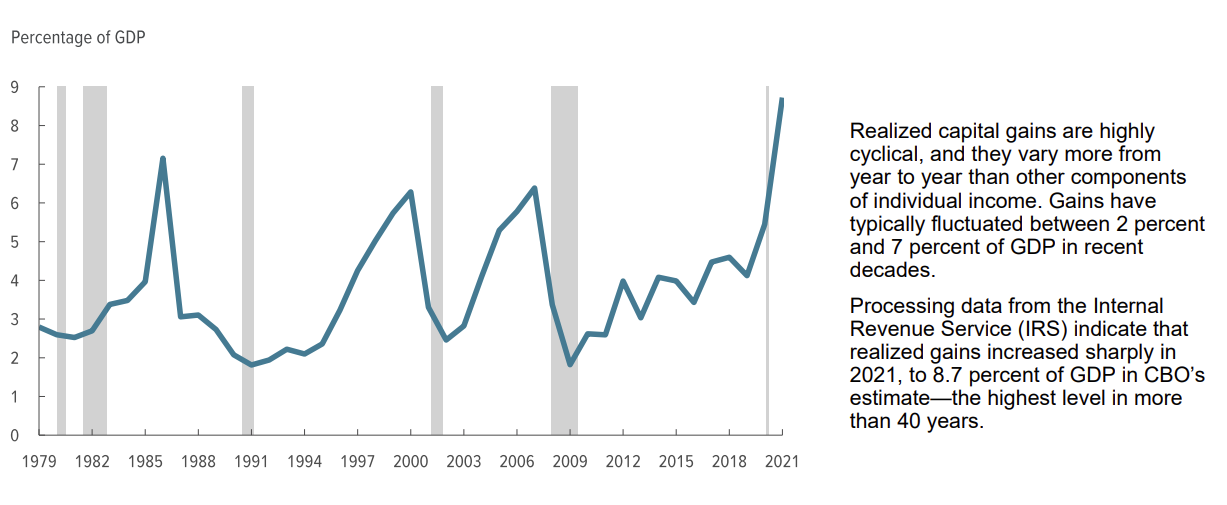
(Source: Congressional Budget Office)
In the U.S., capital markets play an outsized role, directly influencing wealth creation, government revenue through capital gains taxes, and even retirement savings. In China, however, capital markets are nearly irrelevant to the average citizen, with under 5% of household wealth invested in stocks. Instead, China’s households hold their wealth in real estate and cash, leaving a significant gap in the financial ecosystem.
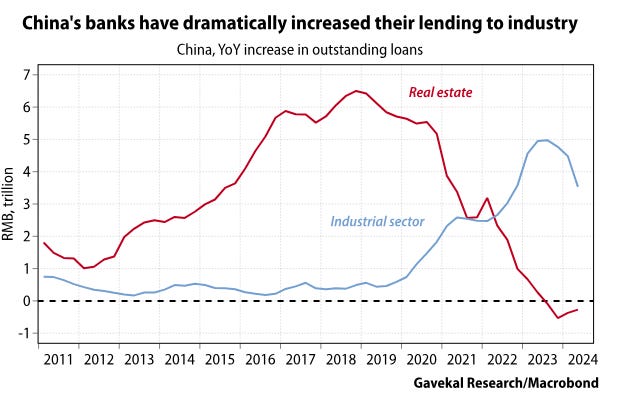
The Chinese government’s policy in recent years has deliberately shifted focus from speculative property investments to sustainable industrial growth. Capital, previously funnelled into real estate, has found its way into sectors like AI, automation, EV production, and manufacturing innovations. Notably, much of this investment is funded domestically rather than through equity markets.
The Long-Term Vision: From Speculation to Stability
Rather than an immediate growth booster, China’s latest stimulus package is about building long-term stability in its capital markets. If China can balance a mix of traditional bank lending with a growing stock market, the benefits for investors could be substantial. As China moves toward a stable and participatory capital market, it opens doors to those seeking long-term growth, not speculative gains.
As long-term investors take notice, we anticipate that asset allocations toward China will likely increase. Those with a focus on quality, income, and cash flow may find themselves ahead of the curve, benefiting from the stability that China’s market is working toward.
The Tamim Takeaway
The recent “stimulus” is more than just a short-term boost; it’s the foundation of a transformative economic strategy. China’s capital market is becoming a viable investment, especially as asset allocators start to engage in the coming months. This shift could prove advantageous for Australian investors closely linked to Chinese growth, especially as China’s long-term market potential finally unfolds.
In the end, this isn’t about China bailing out excess producers or driving up consumer debt. It’s about building a sustainable economic model that favours steady growth over rampant speculation. For investors, the lesson is clear: Don’t just do something – wait, watch, and be prepared to act when China’s markets find stable ground. The opportunities may just be starting to take shape.
This week’s TAMIM Reading List offers a fascinating mix of politics, technology, and culture. Explore the dynamics behind Donald Trump’s widespread influence and the innovative changes reshaping Los Angeles as a city of the future. Dive into quantum geometry beyond space and time and reflect on the humble origins of the internet. Uncover the intriguing history of the world’s most famous swear word and relive the bold partnership between Quincy Jones and Frank Sinatra. Finally, understand why Trump might want to cancel the CHIPS Act and the ongoing cyber war between a firewall vendor and Chinese hackers. Each article sheds light on the forces shaping our past, present, and future.
In this 3-part series, we will explore trends within the global and Australian gambling industry. In Parts 2 and 3, we’ll highlight 3 small-cap stocks on the ASX that we believe offer the best upside in a consolidating industry.
With the Melbourne Cup now behind us, Australia’s passion for gambling has been on full display. Known as “the race that stops a nation,” the Melbourne Cup highlights Australia’s love of horse racing and serves as a significant revenue generator for the gambling industry. Each year, Australians place over $221 million in bets on the Melbourne Cup alone, with many placing their wagers both online and at physical betting locations.
The gambling industry is one of the largest global sectors, generating an estimated $1.2 trillion in annual wagering turnover. With a high concentration of both traditional operators and emerging technology providers, the industry is undergoing rapid evolution. These shifts are fueled by increased regulation, technology innovation, and the emergence of new gambling verticals, each of which brings opportunities and challenges to the sector.
Australia represents a unique landscape within this global market, with some of the highest per capita gambling losses in the world, averaging around $1,276 per person annually. Australians spend approximately $25 billion each year on gambling, with a large portion of this attributed to electronic gaming machines (pokies), racing, and lotteries. Although the market is highly regulated and prohibits online casinos and in-play sports betting, the popularity of sports betting, online lotteries, and emerging digital platforms has kept the industry dynamic.
Regulation and Expansion
Worldwide, regulation in the gambling industry has increased significantly in recent years, both to protect consumers and to capitalise on the economic potential of legalised gambling. In the U.S., for instance, the repeal of the Professional and Amateur Sports Protection Act (PASPA) in 2018 has allowed states to legalise sports betting, creating a multi-billion dollar industry practically overnight. Australia, while a more mature market, continues to see regulatory adjustments.
In Australia, gambling is heavily regulated by each state and territory, with national oversight provided by the Australian Communications and Media Authority (ACMA). Gambling laws vary by state, and while sports betting and lotteries are legal, online casino games remain banned. Additionally, Australia imposes stringent advertising restrictions on gambling companies, especially for live sports events, and requires operators to enforce strict identity verification processes to combat problem gambling. This focus on consumer protection creates both barriers and opportunities for operators, pushing them to differentiate through compliance and service quality.
Despite regulatory restrictions, Australia’s gambling market has been resilient. Sports betting, in particular, has expanded in recent years due to the growing popularity of digital platforms. With around $1 billion spent annually on sports betting, operators continue to see opportunities to expand through increased digital offerings and innovative betting options, such as in-play wagering (where permitted) and micro-betting on specific outcomes within games. In response, some Australian operators are exploring offshore markets where regulatory conditions are more favourable, expanding their reach into less restrictive environments.
Technology Innovation
As gambling moves online, technology innovation becomes increasingly critical. In Australia, digital transformation has significantly influenced consumer gambling habits. While traditional in-person gambling via pokies and lotteries remains popular, online sports betting and fantasy sports are seeing considerable growth, particularly among younger Australians. Technology providers and operators are racing to introduce innovations that appeal to these digital-savvy consumers.
Key areas of technology innovation in Australia include in-play betting, mobile betting applications, data analytics, and AI-driven personalisation. In-play betting, which allows users to place bets during live events, has seen strong demand but faces regulatory hurdles in Australia, where live betting can only be conducted over the phone or in person. To navigate these restrictions, companies are investing in seamless app experiences and offering alternative betting formats that maintain user engagement without violating regulations.
Personalisation and data analytics are also transforming the gambling experience. By harnessing big data and AI, operators can tailor marketing efforts, personalise betting recommendations, and improve customer experience, all while adhering to Australia’s responsible gambling standards. Evolution Gaming, Genius Sports, and OpenBet are examples of technology providers supplying operators with real-time data feeds, betting engines, and tools that enhance engagement and personalisation. These solutions help operators optimise their platforms to meet evolving consumer expectations, creating a more engaging and user-friendly environment.
Margin Compression for Operators
Profit margins in the gambling industry typically range from 10% to 20%, but rising regulatory costs, advertising restrictions, and heightened competition have compressed margins for operators worldwide, including in Australia. Many operators face pressure to maintain profitability while complying with complex regulations and bearing high tax burdens.
In Australia, operators are subject to a range of fees and taxes, including the point of consumption tax (POCT), which taxes bets based on the location of the bettor rather than the operator. This tax, introduced to capture revenue from online betting, has created additional financial strain for operators, especially those with high levels of competition. To protect margins, operators are adopting more efficient technology solutions, automating risk management, and focusing on customer retention to reduce customer acquisition costs.
Another impact on margins is advertising restrictions. Australia has strict rules on gambling advertising, particularly around live sports and TV broadcasts, which limits operators’ ability to promote services during prime sporting events. To adapt, operators are shifting focus toward digital marketing channels, utilising data analytics for targeted campaigns and focusing on creating a differentiated experience to build organic growth rather than relying solely on advertising.
Consolidation
In recent years, the gambling industry has seen a significant wave of mergers and acquisitions, as companies seek to scale and capture greater market share. This consolidation is reshaping the competitive landscape, particularly in Australia, where larger players like Tabcorp and Sportsbet dominate. Smaller operators, often challenged by regulatory costs and competitive pressures, are becoming acquisition targets for larger, better-capitalised companies. Consolidation provides companies with economies of scale, access to larger customer bases, and the ability to spread regulatory compliance costs over a broader revenue base.
For investors, this M&A activity presents unique opportunities. Consolidation generally results in a more stable industry structure, where larger players are better positioned to navigate regulatory challenges and capture market growth. Smaller, innovative companies that excel in niche segments are often acquired by larger operators looking to diversify and bolster their portfolios with new technology and capabilities. In the Australian market, we expect continued consolidation as both global and domestic players seek to secure market share and build scale.
Emerging Verticals
The gambling industry is expanding beyond traditional sports betting and casinos, with new verticals like esports, fantasy sports, and blockchain-based gambling gaining traction. In Australia, esports and fantasy sports are particularly popular among younger audiences, opening a high-growth market segment for operators. As esports gain legitimacy as a spectator sport, companies are capitalising on this trend by introducing esports betting options and fantasy leagues.
Blockchain technology is also making inroads, with cryptocurrency-based betting platforms offering transparency and enhanced security for users. While Australian regulations currently limit certain blockchain-based gambling activities, consumer interest is growing, especially in decentralised betting platforms that offer transparency and anonymity. Operators that can adapt to these emerging trends have an opportunity to capture a younger demographic and diversify their offerings beyond traditional sports and pokies.
Fantasy sports are also gaining momentum in Australia, with platforms like Draftstars and Moneyball leading the charge. Fantasy leagues allow players to form their teams and compete based on real-world sports outcomes, adding a layer of strategy and engagement that appeals to sports enthusiasts. As more Australians engage with fantasy sports, operators have an opportunity to drive cross-promotions and expand their user base.
The TAMIM Takeaway
The Australian gambling industry is a dynamic and evolving market with high levels of consumer demand and unique regulatory challenges. While regulatory compliance and competitive pressures present headwinds, the sector remains highly lucrative, particularly for companies focused on digital transformation and innovation.
For investors, the technology provider segment offers attractive margins and less regulatory exposure, making it a compelling area for growth. Additionally, nimble online operators that excel in personalisation and digital engagement are well-positioned to take market share from legacy incumbents. As industry consolidation continues, these operators may become acquisition targets, allowing them to benefit from both organic growth and potential exit opportunities.
In Parts 2 and 3 of this series, we will delve into specific ASX-listed small-cap stocks that TAMIM believes have substantial upside potential. These companies are poised to capitalise on industry trends like technology innovation, regulatory expansion, and emerging verticals. Stay tuned as we reveal our top picks for investors seeking to navigate this vibrant and high-potential sector.
Following Donald Trump’s 2024 victory and the Republican control of the Senate and likely the House, substantial shifts are expected across the U.S. economic landscape. With a stronger Republican legislative presence, Trump’s pro-business and deregulatory policies are poised to reshape industries ranging from technology and energy to healthcare and finance. In this article TAMIM’s managing director, Darren Katz explores how Trump’s administration and the Republican agenda are likely to impact these sectors.
Trade Policy and Global Supply Chains
Trump’s “America First” economic philosophy will likely continue to emphasise reducing trade deficits and reshoring production. His administration is expected to increase tariffs, particularly on imports from China, aiming to bring manufacturing jobs back to the U.S. and reduce reliance on foreign suppliers. For industries reliant on overseas production, particularly in technology and consumer goods, this could mean higher production costs. However, U.S.-based manufacturers may benefit from less competition with foreign imports, boosting demand for domestically made goods.
In addition to trade with China, Trump’s administration may adopt a more assertive stance with other trading partners. This approach could disrupt established supply chains, impacting multinational corporations with global manufacturing networks. However, these protectionist measures are intended to bolster American manufacturing, potentially creating new opportunities for U.S. companies that focus on domestic production and supply chain resilience.
Fiscal Policy: Tax Cuts and Deregulation
A primary economic goal for Trump’s administration is corporate tax reduction, which is anticipated to lower business costs and stimulate investment. Corporate tax cuts, combined with further incentives for domestic production, are expected to appeal to manufacturers and energy producers, incentivising capital investment within the U.S. However, these tax cuts may increase the national deficit, potentially raising borrowing costs in the long term, which could have implications for federal spending on public services.
Deregulation is another key focus. Trump’s administration plans to reduce regulatory oversight in sectors such as energy, finance, and healthcare. This could allow companies to operate with fewer restrictions, potentially lowering costs and raising profits. However, it also brings concerns about environmental and consumer protections, as fewer regulations in energy and finance might lead to increased environmental impacts and higher risks for consumers.
Technology and Innovation: Focus on Domestic Production
The technology sector is expected to benefit from Trump’s focus on domestic semiconductor production, particularly through the CHIPS Act, which supports U.S. manufacturing of crucial tech components. Trump’s administration may advance this initiative with tax incentives and lighter regulatory requirements to encourage swift expansion in semiconductor manufacturing. By reducing reliance on foreign suppliers, particularly in Asia, the U.S. aims to strengthen its position in global technology markets.
Trump’s approach to technology will also emphasise intellectual property protection and data security, especially regarding Chinese competitors. His administration’s policy will likely include stricter safeguards to prevent intellectual property theft and protect sensitive information, potentially fostering competitiveness among U.S. tech firms.
In the reshoring push, Trump’s policies aim to incentivise tech companies to bring manufacturing operations back to the U.S., making use of tax incentives and fewer regulatory restrictions. While this may create more jobs domestically, it could lead to higher costs for tech firms accustomed to cheaper foreign production.
Energy Sector: Emphasis on Fossil Fuels
Trump’s administration is likely to prioritise traditional energy sectors, including oil, gas, and coal, through reduced regulatory barriers and incentives for domestic production. By easing restrictions on exploration and drilling, the administration hopes to stimulate growth and lower energy prices. This approach could benefit companies in the fossil fuel sector, allowing them to expand operations with fewer environmental restrictions and reduced compliance costs.
The focus on fossil fuels may create challenges for renewable energy companies, which thrived under previous administrations’ clean energy incentives. Without substantial federal support, wind, solar, and electric vehicle infrastructure may face slower growth. Trump’s approach may nonetheless incorporate some incentives for natural gas, which could serve as a cleaner alternative to coal and align with global efforts to curb emissions without abandoning traditional energy sources.
Healthcare: Market-Driven Approach
In healthcare, Trump’s market-driven strategy aims to reduce regulatory burdens on pharmaceutical companies, healthcare providers, and insurance firms. His administration is likely to ease restrictions on drug pricing and innovation, allowing pharmaceutical companies greater flexibility and potentially accelerating the availability of new treatments.
While Trump may avoid strict price control measures on drugs, which Democrats have historically favoured, his administration will likely focus on removing barriers for healthcare providers, aiming to reduce costs and expand patient access. This could improve profitability for healthcare companies, though it might raise concerns about drug affordability for consumers. Additionally, Trump is expected to support the continued growth of telehealth services, an area that gained prominence during the COVID-19 pandemic and offers expansion potential within healthcare technology.
Financial Services: Reduced Regulation and Tax Incentives
The financial sector stands to benefit from Trump’s deregulatory stance and potential corporate tax reductions. Reduced regulatory oversight will allow banks and financial institutions greater flexibility in lending practices, which could increase profitability by cutting compliance costs. By prioritising corporate tax cuts, Trump’s policies are likely to enhance financial institutions’ net income, enabling them to reinvest in growth opportunities.
While deregulation may benefit financial institutions, it could also heighten risks related to financial stability, particularly if there is reduced oversight on lending practices. Trump’s administration may indirectly influence interest rate expectations through aggressive fiscal spending, which could drive up borrowing costs if the national deficit grows.
Industrial and Consumer Sectors: Infrastructure and Trade Policy
Infrastructure investments under Trump are expected to focus on traditional projects such as highways, bridges, and defence spending, rather than green infrastructure. This approach will benefit the construction, engineering, and defence sectors, as these industries supply essential materials and services for large-scale infrastructure projects.
For consumer goods and retail, Trump’s tax cuts could lead to increased disposable income, which may stimulate consumer spending in retail and electronics. However, his trade policies could increase costs on imported goods, potentially raising consumer prices in stores. Retailers reliant on global supply chains will need to navigate these tariffs carefully to protect profit margins.
The TAMIM Takeaway
The re-election of Donald Trump is set to reshape the U.S. economy across multiple sectors. Trump’s policies focus on deregulation, tax cuts, and support for traditional industries like fossil fuels and manufacturing. While these strategies may boost short-term growth, they bring challenges, particularly in the areas of trade, environmental impact, and regulatory oversight.
For investors, aligning portfolios with Trump’s pro-business policies may provide opportunities in fossil fuels, technology, financial services, and infrastructure. However, a cautious approach to sectors reliant on international supply chains or renewable energy may be prudent, as these areas may face headwinds under the new administration. TAMIM Asset Management maintains a balanced investment strategy that adapts to Trump’s economic policies, capitalising on growth opportunities in key sectors while safeguarding against potential volatility.



 BlueBet Holdings Limited (ASX: BBT) is a leading online wagering operator in the Australian market, known for its innovative technology, data-driven approach, and relentless focus on delivering a superior customer experience. The company’s recent transformative merger with Betr has further solidified its position as a force to be reckoned with in the highly competitive Australian wagering landscape.
 Online sports betting and iGaming operator PointsBet (ASX: PBH) has reported strong financial results for the 2024 fiscal year, highlighting its growing presence in key regulated markets and a clear trajectory towards sustained profitability.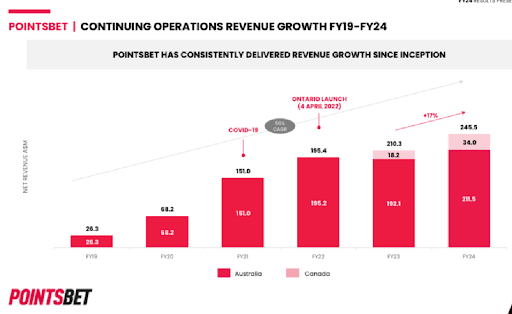





 Worldwide, regulation in the gambling industry has increased significantly in recent years, both to protect consumers and to capitalise on the economic potential of legalised gambling. In the U.S., for instance, the repeal of the Professional and Amateur Sports Protection Act (PASPA) in 2018 has allowed states to legalise sports betting, creating a multi-billion dollar industry practically overnight. Australia, while a more mature market, continues to see regulatory adjustments.
 As gambling moves online, technology innovation becomes increasingly critical. In Australia, digital transformation has significantly influenced consumer gambling habits. While traditional in-person gambling via pokies and lotteries remains popular, online sports betting and fantasy sports are seeing considerable growth, particularly among younger Australians. Technology providers and operators are racing to introduce innovations that appeal to these digital-savvy consumers.
 In recent years, the gambling industry has seen a significant wave of mergers and acquisitions, as companies seek to scale and capture greater market share. This consolidation is reshaping the competitive landscape, particularly in Australia, where larger players like Tabcorp and Sportsbet dominate. Smaller operators, often challenged by regulatory costs and competitive pressures, are becoming acquisition targets for larger, better-capitalised companies. Consolidation provides companies with economies of scale, access to larger customer bases, and the ability to spread regulatory compliance costs over a broader revenue base.
 The gambling industry is expanding beyond traditional sports betting and casinos, with new verticals like esports, fantasy sports, and blockchain-based gambling gaining traction. In Australia, esports and fantasy sports are particularly popular among younger audiences, opening a high-growth market segment for operators. As esports gain legitimacy as a spectator sport, companies are capitalising on this trend by introducing esports betting options and fantasy leagues.