New technologies like AI and generative AI are at an inflection point, infiltrating our daily lives from work to play. Tools like ChatGPT have become household names, with each iteration bringing astonishing improvements. However, flying more under the radar is the progress being made in autonomous transportation. As the utilisation of data improves, so too does the future of transport.
While generative AI garners much of the spotlight, the advancements in autonomous vehicles are steadily transforming the landscape, particularly in areas like Tesla’s (NASDAQ: TSLA) Full Self-Driving (FSD) software, drone deliveries, and safe autonomous ride-hailing services. These developments, though less publicised, hold significant potential to reshape our daily lives and the broader economy.
Tesla on Autopilot
Tesla’s driver assistance features, known as Autopilot or Full Self-Driving (FSD), are designed to enhance driving convenience and safety, although they still require active driver supervision and are not yet fully autonomous. Since its rollout in 2020, FSD has steadily improved, incorporating features such as self-parking, auto lane changes, and traffic navigation.
Elon Musk has consistently emphasised the potential of FSD technology to revolutionise the automotive industry. While the journey towards a fully autonomous driving experience has faced regulatory and legal scrutiny, significant progress has been made, particularly in addressing safety concerns and enhancing system reliability.
In China, Tesla has been offering FSD on a subscription basis for four years, albeit with a restricted set of features. Data security has been a crucial factor in this gradual rollout. To advance the technology, Musk is working to obtain official approval for transferring data collected in China abroad, which is essential for training the algorithms behind autonomous driving.
Recent developments signal promising progress for Tesla’s FSD in China. The company’s Model Y and Model 3 vehicles were recently included in a list of 76 car models compliant with China’s data security requirements by a top Chinese auto association. This compliance is a significant milestone, paving the way for a potential launch of unrestricted FSD in China.
Tesla’s presence in China has grown significantly, with over 1.7 million cars sold since entering the market a decade ago and its Shanghai factory being the company’s largest globally. The anticipated rollout of unrestricted FSD could transform the Chinese market, enhancing the competition for cost-effective driver assistance features and intensifying the price dynamics that Tesla initiated early last year.
Moreover, Tesla’s agreement with Baidu to use the tech giant’s mapping licence for data collection on China’s public roads marks another step forward. This collaboration will allow Tesla to leverage advanced mapping data, further refining its autonomous driving technology and bringing the promise of fully autonomous vehicles closer to reality.
Waymo’s Autonomous Ride-Hailing Milestone
Alphabet’s (NASDAQ: GOOG) subsidiary Waymo recently made headlines by announcing that it now provides 50,000 paid autonomous ride-hailing trips per week across three cities. This achievement follows more than a year after Waymo surpassed one million paid trips.
Waymo launched its autonomous ride-hailing service in Phoenix in 2020, now covering 225 square miles 24/7. In 2022, it expanded to San Francisco with paid rides and no safety driver, and plans to gradually extend across the peninsula. This year, Waymo began 24/7 services in Los Angeles, covering 63 square miles, and started testing in Austin, Texas, with plans to launch a paid service there by year-end.
The technology powering Waymo’s autonomous ride-hailing service is classified as SAE (Society of Automotive Engineers) Level 4, significantly more advanced than the SAE Level 2, or semi-autonomous, technology used by Tesla. Waymo’s system utilises high-definition maps and lidar, allowing the vehicle to pinpoint its exact location within centimetres. These precise maps also define the specific areas and routes where the autonomous vehicles can operate without a driver.
A recent study of the first 7 million miles of Waymo’s autonomous driving through October 2023 revealed significantly lower accident rates compared to human drivers. The study showed a 0.41 accident rate per million miles involving any injury for Waymo, versus 2.78 for human drivers. Key findings include:
An 85% reduction in crash rates involving injuries (0.41 vs. 2.78 per million miles).
A 57% reduction in police-reported crash rates (2.1 vs. 4.85 per million miles).
Over 7.1 million miles, this equates to 17 fewer injuries and 20 fewer police-reported crashes compared to human drivers.
Waymo’s steady progress in expanding its autonomous ride-hailing service and improving safety metrics underscores the potential of autonomous transport to significantly enhance road safety and transform urban mobility.
Robots Are Delivering
The use of drones for delivery services is gaining momentum, with companies like Zipline International and Amazon (NASDAQ: AMZN) leading the charge in revolutionising the logistics industry.
Zipline is an American company that designs, manufactures, and operates delivery drones. It has established distribution centres in Africa, Japan and the United States. As of April 2024, Zipline’s drones have made over one million commercial deliveries and flown more than 70 million autonomous miles. The company’s drones are primarily used to deliver medical supplies, including whole blood, platelets, frozen plasma, cryoprecipitate, vaccines, infusions, and common medical commodities.
If Zipline’s autonomous software were a human pilot, it would have accumulated over 120 years of flight time. These zero-emission drones have delivered more than 10 million products across four continents. The demand for Zipline’s services continues to grow, with the recently announced Platform 2 system set to deliver orders for Panera Bread, Memorial Hermann Health System, and Jet’s Pizza in the greater Seattle, Houston, and Detroit metro areas, respectively.
The advancement of technologies such as computer vision, simultaneous localisation and mapping, and reinforcement learning is further driving the integration of AI in drone controls.
Amazon announced last month the expansion of its drone delivery service, Prime Air, to Arizona. This follows previous rollouts in California and Texas, with plans to extend services to the UK and Italy soon. Launched in 2013, Prime Air aims to deliver small household items such as electronics, beauty products, and prescription medications in 30 minutes or less. Semi-automated drones fly out from depots stocked with products, similar to traditional delivery vehicles.
These developments in drone delivery services highlight the growing role of autonomous technologies in transforming the logistics landscape, making deliveries faster, more efficient, and environmentally friendly.
The TAMIM Takeaway
The progress in autonomous transport is steadily transforming the logistics and automotive industries. These advancements, though sometimes under the radar, are reshaping the way we work and live, promising safer roads and more efficient deliveries. Savvy investors should continue to watch closely – as the technology evolves and matures, there could be potential for extraordinary returns for those who back the right players.
Disclaimer: Alphabet’s (NASDAQ: GOOG) and Tesla (NASDAQ: TSLA) are held in TAMIM Portfolios as at date of article publication. Holdings can change substantially at any given time.
Last week’s 2024-2025 Federal Budget marked the Labor government’s second surplus since taking power in 2022.
The $9.3 billion surplus underscores Australia’s economic resilience, with the country held up by the mining sector and selling houses to each other. Recognising the strategic importance, the government has allocated a $22.7 billion Future Made in Australia package to catalyse private investment in net-zero industries, positioning Australia as a leader in the global sustainability transition.
Tax cuts for all income taxpayers from July 1st, a $300 household energy rebate, and measures to boost housing supply and affordability are expected to stimulate consumer spending. Could this further benefit resilient retail companies? It wasn’t all homes and mines, the childcare sector also received additional funding to attract and retain staff.
As Australia navigates the post-pandemic era and sustainability challenges, this budget presents strategic opportunities for ASX-listed companies across multiple sectors.
Is Australia a Renewable Energy Superpower?
The $22.7 billion Future Made in Australia package was the cornerstone of the budget as the government looks to secure its role in the global shift to net zero emissions.
The mining sector is a key focus, with $8.8 billion allocated over the decade to add value to resources and strengthen critical minerals supply chains. This includes a $7 billion production tax incentive for processing and refining critical minerals. Up to $1.2 billion will fund strategic critical minerals projects through existing facilities. $566.1 million will support Geoscience Australia in mapping critical minerals resources, aiding junior explorers.
The budget also streamlines approvals for nationally significant renewable projects and foreign investment decisions. Overall, the measures position Australia’s mining industry as pivotal to the net zero transition and global supply chains for minerals like lithium, nickel and rare earths.
Green technologies like green hydrogen, renewable energy generation and rechargeable battery manufacturing are set to benefit with Lynas Rare Earths (ASX: LYC), BHP Group (ASX: BHP), Pilbara Minerals (ASX: PLS) and Fortescue (ASX: FMG) potential winners.
Housing Support
The government announced several measures aimed at addressing housing affordability and increasing supply, which could significantly impact the housing market and related industries.
Labour committed an additional $6.2 billion in new housing investment, bringing the total to $32 billion under the administration. This includes $1 billion to assist states and territories in building more homes and increased funding for student accommodation. $16.5 billion was allocated for infrastructure projects to better connect cities and towns, facilitating housing development in well-connected areas. To address the skilled labour shortage hindering the home building sector, the government announced $90.6 million in spending to attract more apprentices, provide fee-free training, streamline visa programs for in-demand trades, and implement other measures to boost the skilled workforce.
These initiatives are part of the government’s flagship target to deliver 1.2 million new, well-located homes over five years, starting in July 2024.
However, concerns have been raised about the feasibility of achieving this ambitious goal. Should it be achieved, building materials companies like James Hardie Industries (ASX: JHX), a leading fiber cement manufacturer, and Boral (ASX: BLD), a major supplier of construction materials, could potentially benefit from increased demand.
Monitoring building approvals from the Australian Bureau of Statistics (ABS) will be crucial to assess the impact and effectiveness of these policies in boosting housing supply and addressing affordability challenges.
Childcare Changes
The Australian Government announced further investment in childcare following on from the previous year’s budget.
The new measures expect to deliver net savings of $410.7 million over 4 years from 2024–25 by improving the payment accuracy of the Child Care Subsidy (CCS) program. Further to that investment, the government has committed to provide funding towards a wage increase for the early childhood education and care workforce. We believe this will allow the industry to attract staff and talent to the sector.
A company we hold within the TAMIM fund set to benefit from this is Embark Early Education (ASX: EVO), a leading provider of early childhood education and care services in Australia.
The company currently owns and operates 24 childcare centres with 2,198 licensed places, employing 630 staff who care for approximately 1,800 children daily across Queensland, Victoria, New South Wales, Tasmania, and South Australia. Originally incorporated in New Zealand and listed on the NZX as Evolve Education Group Limited, the company underwent a scheme of arrangement in June 2023. This involved swapping shares in the New Zealand entity for shares in a newly incorporated Australian company, Embark Early Education Limited, which was admitted to the official list of the ASX. This redomiciling process allowed the company to focus solely on its Australian operations after divesting its New Zealand business in 2022.
Embark Early Education reported strong financial results for the calendar year 2023.
Revenue increased by 16% to $63 million, and Centre operating earnings rose by 30% to $17.1 million compared to the previous year. Profit for FY2023 was $8.16 million, and the company paid two fully franked dividends of 2 cents each in August and November 2023. The company maintained a disciplined approach to cost control, with support office costs remaining well below the relative level of ASX-listed peers in the sector.
A key factor contributing to Embark’s strong performance was its high occupancy levels.
Average annual occupancy increased by 2.3 percentage points to 82.4%, with peak occupancy reaching 86.1% in late November 2023, significantly higher than other ASX-listed operators in the sector. The company’s financial position is strong, with cash reserves of $26 million as of December 2023.
TAMIM Takeaway
The 2024-2025 Federal Budget outlines a comprehensive roadmap for Australia’s economic future, catalysing growth across strategic sectors.
With substantial investments in mining, housing, and childcare, the government aims to harness the nation’s strengths while navigating the global sustainability transition. The initiatives present lucrative opportunities for ASX-listed companies well-positioned to capitalise on emerging trends.
Time will be the ultimate judge of its efficacy but there can be no doubt that a number of ASX companies are poised to benefit.
Disclaimer: BHP Group (ASX: BHP), Pilbara Minerals (ASX: PLS), Fortescue (ASX: FMG), Boral (ASX: BLD) and Embark Early Education (ASX: EVO) are held in TAMIM Portfolios as at date of article publication. Holdings can change substantially at any given time.
This week’s reading and viewing list covers Value investing in an uncertain world: Fireside chat with Bill Ackman and Ryan Israel, The Impact of Debt and Book review: The Man Who Solved The Market.
📺 Value investing in an uncertain world: Fireside chat with Bill Ackman and Ryan Israel (UBS)
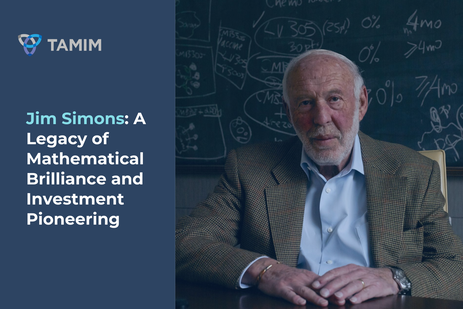
The investment world mourns the loss of another titan: Jim Simons, a prizewinning mathematician who transitioned from a stellar academic career to finance — a field he initially knew little about — to become one of Wall Street’s most successful investors.
Simons, who passed away at the age of 86, leaves behind a legacy marked by groundbreaking achievements in quantitative investing, significant contributions to mathematical research, and a remarkable commitment to philanthropy.
Simons’ journey into investing is nothing short of unconventional. A mathematical genius and former code-cracker for the US government, he initially dabbled in the stock market as a side interest. After leaving his code-cracking career, he started an investment fund, initially using a fundamental investment approach. When this strategy didn’t yield the desired results, Simons leveraged his mathematical expertise to develop quantitative methods for exploiting market inefficiencies. The results were extraordinary.
As we bid farewell to this visionary, it’s crucial to reflect on his life, achievements, and the invaluable lessons he leaves behind.
Early Life and Mathematical Legacy
Born in Massachusetts, on April 25, 1938, Simons’ early life was marked by a profound love for mathematics.
He pursued his passion for the subject with unwavering dedication, earning a bachelor’s degree in mathematics from the Massachusetts Institute of Technology (MIT) and a PhD in mathematics from the University of California, Berkeley. Following the completion of his PhD thesis, he collaborated with Shiing-Shen Chern and yielded the groundbreaking Chern-Simons theory, a mathematical framework with profound implications for fields ranging from geometry to quantum physics. Simons’ mathematical prowess earned him prestigious accolades, including the Oswald Veblen Prize in Geometry.
Simons’ career took a notable turn when he embarked on a career as a codebreaker for the U.S. Department of Defense during the Vietnam War.
It was during this time that Simons honed his skills in cryptanalysis and developed a deep appreciation for the power of computational analysis. However, Simons was drawn to the world of academia. From 1964 he taught mathematics at MIT before standing as chair of the mathematics department at Stony Brook University from 1968 to 1978. Simons made significant contributions to the field of geometry and theoretical physics.
Revolutionising Finance: A Quantum Leap in Investing
After publishing groundbreaking studies in mathematics that influenced quantum field theory, string theory, and condensed matter physics, Jim Simons decided to apply his genius to a more practical endeavour — generating substantial wealth quickly.
In 1978, at age 40, Simons took an unexpected turn and ventured into finance. Ten years later, he founded Renaissance Technologies, a quantitative hedge fund that would redefine the investment landscape. Rejecting traditional methods, Simons pioneered mathematical models and algorithms, assembling a team of brilliant mathematicians, physicists, and computer scientists. Together, they developed complex models to identify patterns and exploit market inefficiencies.
This quantitative approach, coupled with Simons’ unwavering commitment to rigorous data analysis, achieved extraordinary success with the flagship Medallion Fund. Renaissance Technologies’ Medallion Fund, open only to employees and their families, generated a compounded average growth rate (CAGR) of 66% over 33 years before fees, making it one of the most successful hedge funds in history.
Simons equipped his colleagues with advanced computers to process torrents of data filtered through mathematical models, transforming the firm into a virtual money-printing machine. This performance outpaced renowned investors like Warren Buffett and George Soros.
“No one in the investment world even comes close,” wrote Gregory Zuckerman, one of the few journalists to interview Simons and the author of his biography, “The Man Who Solved the Market.”
Philanthropic Legacy
Jim Simons’ impact on the financial world extends far beyond his investment prowess, evidenced by his profound philanthropic endeavours.
Alongside his wife Marilyn, he established the Simons Foundation in 1994, with a mission to support research in mathematics, science, and medicine. Their visionary initiatives, including the Simons Foundation Autism Research Initiative and Simons Collaborations, have catalysed groundbreaking discoveries and transformed scientific inquiry. Simons’ philanthropic vision also encompassed education, as evidenced by his founding of Math for America, a nonprofit organisation dedicated to supporting Science, technology, engineering, and mathematics (STEM) educators in New York City schools.
Through his unwavering commitment to empowering educators and advancing scientific research, Simons leaves behind a lasting legacy that will continue to shape the future of mathematics and science for generations to come.
Lessons Learned and Enduring Principles
Throughout his illustrious career, Jim Simons epitomised the principles of intellectual curiosity, perseverance, and innovation. From his early achievements in mathematics and code-breaking to founding Renaissance Technologies, Simons relentlessly pursued unconventional methods to achieve remarkable success in finance. His emphasis on rigorous research and quantitative models deviated from traditional investing approaches, showcasing his commitment to what he excelled at rather than conforming to established norms.
Simons faced personal tragedies, losing two sons, yet his resilience and dedication to his work and philanthropy remained steadfast. His legacy in both mathematics and finance serves as a powerful reminder of the transformative impact of intellect, innovation, and persistence. Jim Simons’ life and achievements will continue to inspire future generations of mathematicians, investors, and philanthropists, reminding us that true greatness lies in relentless pursuit and dedication.Vale Jim Simons.
Headlines in local financial news have recently featured stories of takeovers, mergers, and acquisitions. The beginning of this decade, marked by a significant downturn, has led to an economic cycle ripe with such activities. This bustling environment presents rich opportunities for unique non-blue-chip companies, especially those with smaller market caps.
In today’s market, both public companies and private equity firms are actively seeking to expand through strategic acquisitions. Competing businesses are eyeing specific assets to boost efficiency, while overseas entities, aided by favourable exchange rates, are acquiring at reduced costs. These acquisitions can enable companies to integrate new segments or enter new markets swiftly, bypassing the challenges of organic growth.
However, it’s important to remember that not all takeovers result in shareholder value. While some deals offer attractive premiums, others serve as a reminder of the risks and complexities inherent in M&A activities.
Adamantem Capital Wins Out in QANTM Bidding War
QANTM Intellectual Property Limited (ASX: QIP) announced last Thursday that it had agreed to enter a binding scheme of arrangement with Fox BidCo Pty Ltd, an entity owned and controlled by funds managed and advised by Adamantem Capital Management Pty Ltd.
Adamantem Capital winning the battle to acquire QANTM for $1.817 per QANTM share with the opportunity to elect to receive either 100% cash, or a 50% cash 50% scrip combination. This follows on from just days earlier having received an unsolicited non-binding indicative proposal from IPH Limited (ASX: IPH), a leading intellectual property group, expressing interest in acquiring all QANTM shares through a scheme of arrangement.
IPH’s proposal included offering 0.291 IPH shares and a fully franked special dividend of up to $0.11 cash per QANTM share, valuing the company at $1.90 per share. A premium to the accepted Adamantem Capital offer.
This takeover represents a significant premium for QANTM shareholders with the company trading hands for under $1 less than 6 months ago.
IPH announced their disappointment to the market in an update stating:
IPH is disappointed that it did not have an opportunity to engage with QANTM to pursue a combination of QANTM and IPH. IPH believes the combination has the potential to create material value for both QANTM and IPH shareholders by bringing together complementary member firms’ service offerings, greater diversification of clients, opportunities to accelerate growth in Asia Pacific through an enhanced combined platform and the unlocking of meaningful synergies.
QANTM’s bidding war ends despite IPH’s bid surpassing a previous offer from Adamantem Capital.
300 Million Reasons to Smile
Pacific Smiles Group Ltd (ASX: PSQ) has been subject to a drawn out takeover by Genesis Capital which took a turn at the end of last month.
The dental group which currently operates 120+ dental centres was subject to an initial bid from Genesis back in December 2023. The bid of $1.40 per share followed notification that it had taken up an 18.75% position in the Pacific Smiles. The attempted acquisition was quickly rebuffed by the board with the suggestion that it did not adequately reflect the strategic value of the Pacific Smiles business and appeared opportunistic in nature.
Genesis was not deterred.
While it took some time the private equity group returned with an increased offer of $1.75. It had also increased its position size in the company in January to 19.90%. This improved offer appeased the board which granted Genesis the opportunity to conduct further due diligence, on a nonexclusive basis, to enable it to put forward a binding proposal.
Enter National Dental Care (NDC).
At the end of April Pacific Smiles entered into a scheme of implementation with NDC to acquire 100% of the shares in Pacific Smiles for cash consideration of $1.90 cash per share, valuing the company at a touch over $300 million. Pacific Smiles will also have the discretion to pay shareholders a fully franked dividend of up to a maximum of 12 cents per share, with any dividend declared reducing the cash consideration of the $1.90 per share under the arrangement. The increased bid has received a unanimous recommendation by the board.
Will we see a return offer from Genesis? We wait with bated breath.
A Perpetual Nightmare
Not all takeovers end positively.
The recent narrative surrounding Perpetual, a stalwart in the funds management sector for 138 years, serves as a poignant reminder that not all takeovers culminate in success. A six month internal review culminated in a deal to sell its corporate trust and wealth businesses for $2.2 billion to Kohlberg Kravis Roberts & Co (KKR).
Perpetual’s ambitious foray into M&A with its acquisition of rival fund manager Pendal for $2.32 billion proved to be a pivotal misstep.
Despite hefty investments and strategic manoeuvring, investor sentiment remained tepid, and Perpetual’s share price languished, failing to recapture its former glory. The KKR bid follows the rejected bid from major shareholder Washington H. Soul Pattinson of $3 billion back in November 2023. The decline in offer serves as a timely reminder to shareholders that not all takeovers end in wealth creation.
The TAMIM Takeaway
Amidst an ever-evolving market characterised by sustained acquisition activity, the pivotal role of a capable and adept management team cannot be overstated.
While a number of examples of recent takeovers have indeed yielded value for shareholders, they also serve as a reminder of the inherent risks and complexities embedded within mergers and acquisitions. Despite the allure of premium valuations and envisioned synergies, the outcomes of such transactions may diverge from initial shareholder expectations. The cautionary tale of Perpetual vividly underscores the imperative of conducting comprehensive due diligence and exercising strategic foresight when navigating the intricate realm of corporate takeovers.
Prudence and discernment remain paramount in safeguarding shareholder interests amidst the allure of potential growth opportunities.
Disclosure: Pacific Smiles Group Ltd (ASX: PSQ) and QANTM Intellectual Property Limited (ASX: QIP) are held in TAMIM Portfolios as at date of article publication. Holdings can change substantially at any given time.