






As the global energy puzzle grows more complex, investors are confronting a critical inflection point: the economic cost of the energy transition is rising, public patience is thinning, and traditional industrial titans are bearing the brunt of an increasingly politicised global order. The disconnect between energy ambition and energy reality is becoming clearer by the day, and for equity markets, it’s sparking a subtle but significant reshuffle.
Rio Tinto: A Canary in the Energy-Industrial Coal Mine
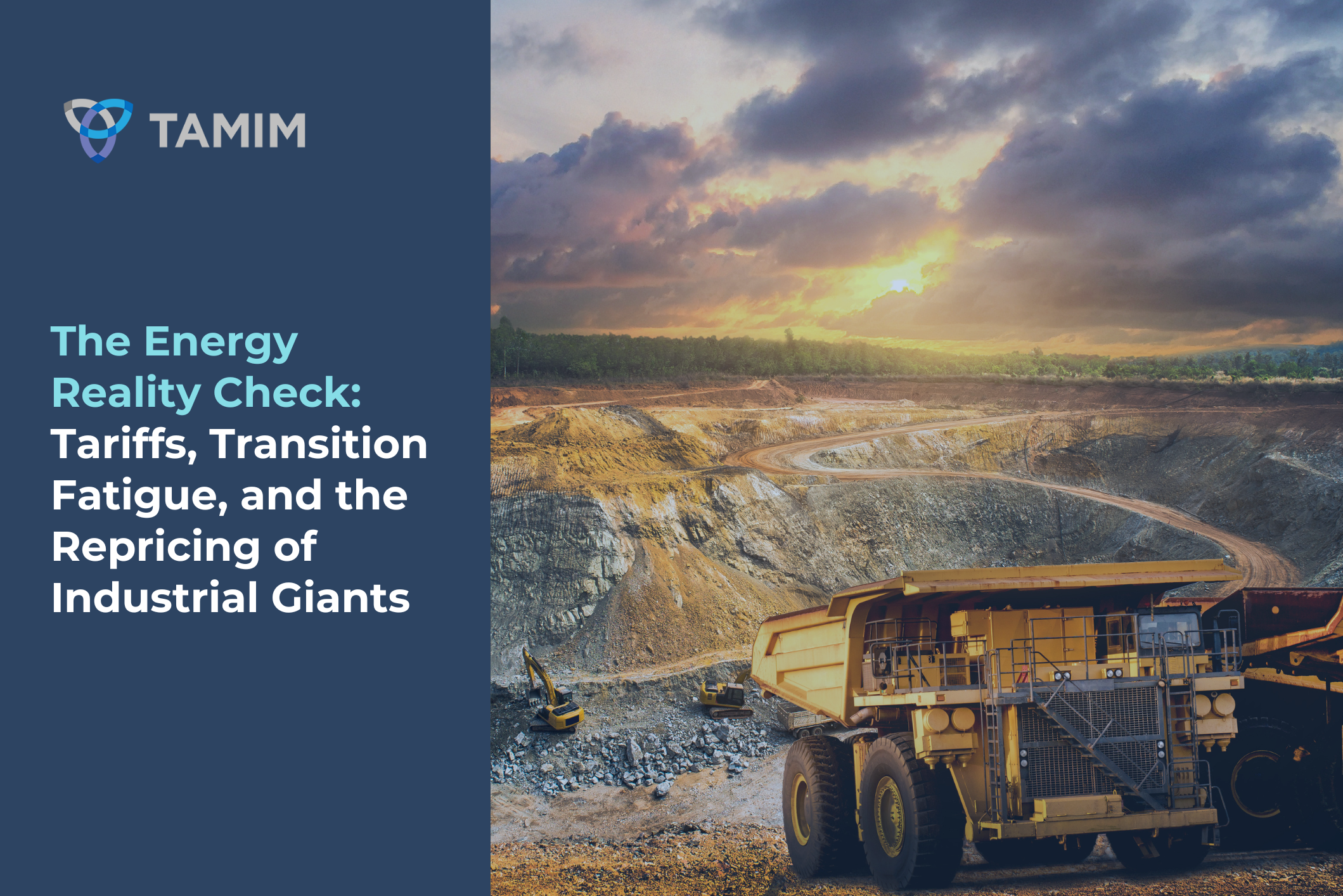
This week, Rio Tinto (ASX: RIO) posted its weakest earnings in five years and slashed its dividend. The headline culprit: weaker iron ore and aluminium prices. But dig deeper, and a broader story emerges, one that reflects the mounting costs and complexity of operating in an energy-constrained, regulation-heavy environment.
Rio’s aluminium division in particular highlights the stress. Aluminium smelting is one of the most energy-intensive industrial processes in the world. In a region like Australia, where coal-fired power is retiring and renewable generation is still scaling, maintaining stable and affordable energy has become a challenge, both financially and politically. What was once considered a straightforward industrial operation is now dependent on grid pricing, firming capacity, emissions policy, and community sentiment.
Meanwhile, capital intensity is rising across the board. Rio is pouring billions into decarbonisation, modernisation, and ESG compliance, all (arguably) necessary in the long run, but dilutive in the short term. Investors have rewarded other sectors with higher multiples in 2024/25, yet companies like Rio are being punished for their transitional growing pains.
This earnings result is more than just a cyclical dip; it is a reflection of how industrial economics are changing in real time.
Australia’s Transition Tension: Public Support on the Line
The broader context for Rio’s challenges is Australia’s energy transition narrative, which is itself under pressure. AGL, Origin, and other major energy players have raised concerns that the public’s support for decarbonisation is at risk due to steep electricity bills and declining grid reliability. These companies have quietly begun urging the government to be honest about the trade-offs: yes, the future is renewable, but the path there is neither straight nor cheap.
This week’s reporting season has crystallised that risk. Energy-intensive sectors are not just dealing with the carbon transition, they’re caught in a squeeze between regulatory uncertainty, infrastructure bottlenecks, and rising political expectations.
Tariffs and Trade Tensions: America’s Energy-Centric Reordering
Across the Pacific, a parallel dynamic is unfolding. Donald Trump’s latest remarks point to a second-term agenda loaded with protectionism: a blanket 10% tariff on all imports and 50% tariffs on key strategic products, including copper and EVs. These moves are not empty rhetoric, they’re part of a broader repositioning of US industrial and energy policy.
Even under Biden, the message is clear: the US wants to rebuild industrial capacity, rewire supply chains, and shore up energy independence. Tariffs and incentives are the new tools of choice. But this has implications far beyond America. Australia, as a major exporter of copper, lithium, and iron ore, will have to navigate a more fragmented and politically charged trade environment.
For a company like Rio Tinto, this environment cuts both ways. While near-term trade tensions are a headwind, the long-term value of its strategic resources, particularly copper, only increases as Western economies try to de-risk their supply chains from China.
Investing in the Age of Energy Realism
The dream of an effortless energy transition is running into the hard facts of engineering, economics, and electoral politics. For investors, this means a more selective approach is required.
We are focusing on three key themes:
- Industrial resilience: Companies like Rio are being tested, but they are also building the infrastructure for tomorrow’s economy. The revaluation of heavy industry is not just about ESG, it’s about geopolitical relevance.
- Cross-sectional volatility: Earnings dispersion is increasing. Some companies, like Nike and Centene this week, are blaming tariffs for weaker guidance. Others are adapting faster. This is fertile ground for active stock-picking.
- The price of energy reliability: As power costs and security become central to policymaking, firms positioned to provide, store, or efficiently use energy will outperform. Conversely, energy-intensive sectors without pricing power face a tougher road.
TAMIM Takeaway
Rio’s result this week wasn’t just about falling commodity prices. It was a glimpse into the mounting pressures facing industrial businesses in a decarbonising world. The energy transition isn’t a straight line, it’s a jagged path filled with geopolitical flashpoints, infrastructure gaps, and rising costs.
Yet for investors, these pressures create opportunities. The repricing of industrials is already underway, and the companies that adapt, those that control their energy inputs, reshape their operations, or benefit from reshoring, will be the long-term winners.
In a world where the definition of energy security is expanding and the politics of trade are turning sharper, it pays to stay informed, nimble, and selectively contrarian.