






There are moments in markets when noise becomes deafening and investors search for a signal that cuts through it. Warren Buffett’s final shareholder letter does exactly that. It is part memoir, part reflection, and part masterclass in how to think about investing over an entire lifetime. It is wise, generous, and occasionally very blunt. He reminds us that the most powerful force in investing is not analytics, models, or brilliance. It is character.
In reading his final message, I kept returning to a simple truth that is easy to forget in an age obsessed with shortcuts. Over the long run, character beats intelligence. Values beat tactics. Behaviour beats forecasts. Buffett’s letter is not a technical document, it is a philosophy of life that quietly explains why he succeeded so spectacularly and why most investors do not.
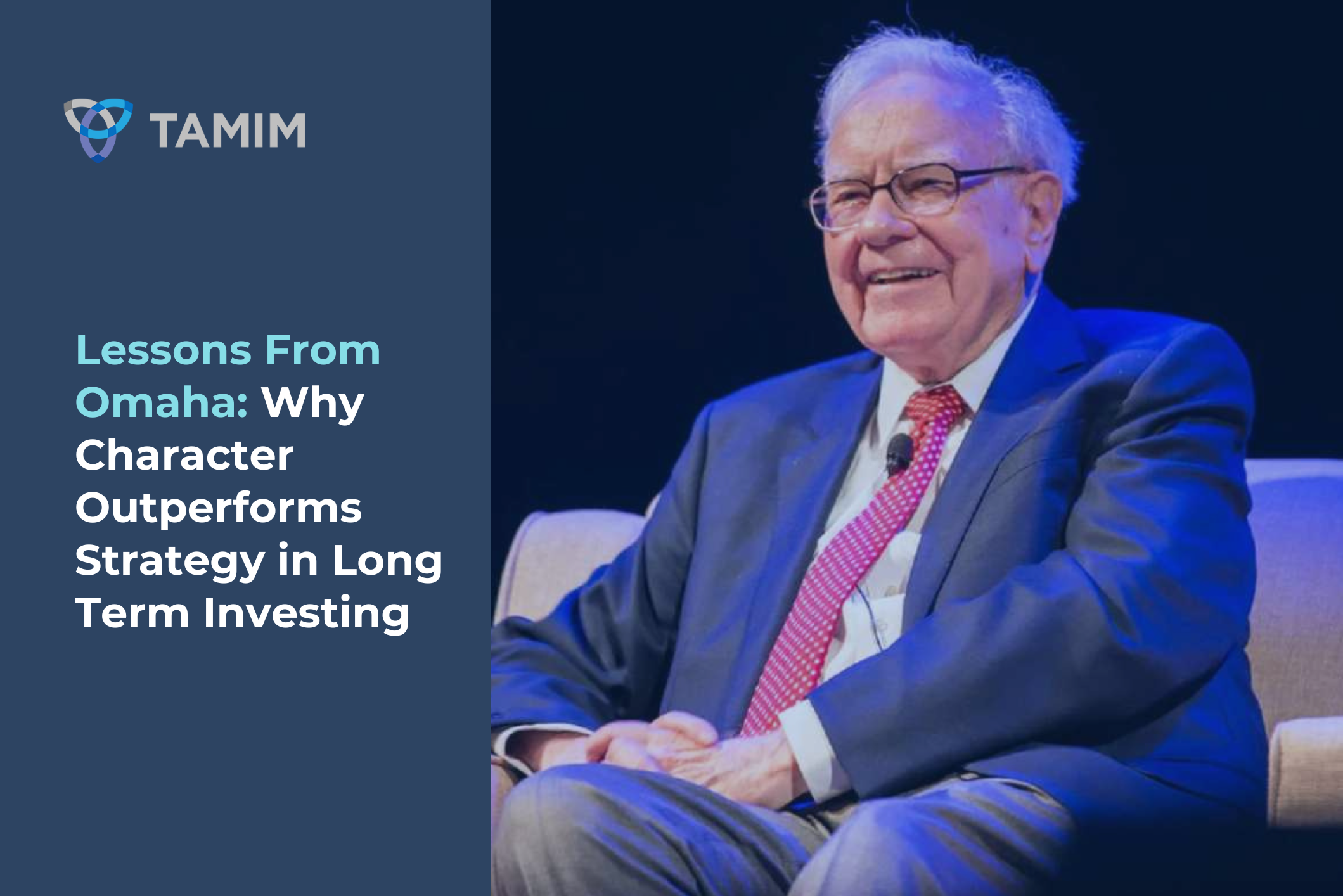
This newsletter explores the idea that character is the real competitive advantage in investing. If we learn nothing else from Buffett’s final words, we should learn this.
The Foundation of an Investor is Character
Most investors believe their edge comes from information or speed or cleverness. They think returns flow from knowing something others do not. Buffett’s entire career argues the opposite. He shows that returns come from patience, honesty, humility, and discipline.
The market constantly invites emotional behaviour. It tempts you to chase what is up, panic when prices fall, compare yourself to peers, envy success stories, fear missing out, or justify decisions because others are doing the same. Buffett rejected all of this. He saw markets as they are, not as he wished them to be, and then he behaved in a way that gave him the best probability of compounding over decades.
His final letter reminds us that investing is not a contest of brains. It is a test of temperament. The strongest portfolio is one built on behaviour that does not change when markets do.
Buffett calls attention to the destructive power of envy. He points out that as CEO pay became more visible, it did not encourage moderation. It encouraged escalation. Instead of competing on performance, executives compared compensation. This same tendency appears among investors. When markets create short term winners, others feel compelled to replicate the same behaviours even if they contradict sound judgement.
Character is the antidote. It protects investors from themselves.
Why Humility Is the Most Underrated Investment Skill
Humility is rarely discussed in financial circles because it sounds like softness. Buffett demonstrates the opposite. Humility is a strength because it allows an investor to acknowledge uncertainty, embrace mistakes, and accept that the future is inherently unpredictable.
Buffett openly admits that his life has been shaped by luck. He acknowledges being born in the right country, with the right health, at the right time. He acknowledges mistakes and misjudgments across decades. He acknowledges that he should have acted faster in situations where leaders suffered from declining capacity. Most investors and executives never admit such things.
Humility gives an investor flexibility. It allows one to change their mind when the facts change. It keeps ego from interfering with rational decision making. Most importantly, humility protects investors from the illusion that intelligence alone guarantees results.
Buffett writes that the second half of his life was better than the first because he learned to behave better. That is an extraordinary statement. It reinforces the idea that character is not fixed. It is something investors can build deliberately.
The Discipline to Avoid Stupidity Is More Valuable Than the Ability to Be Brilliant
Buffett makes a subtle but profound point. Berkshire succeeded because it avoided disaster. Not because it found every winning idea, but because it refused to take existential risks. This behaviour is rooted in character.
Many investors believe outperformance comes from superior forecasts. Buffett believes outperformance comes from avoiding catastrophic mistakes. His philosophy is one of survival. If you can stay in the game long enough, you will eventually experience compounding. If you expose your portfolio to permanent loss, you will never see compounding at all.
This is deeply relevant for investors today. Markets will always contain unknown shocks. Prices will always fluctuate. A portfolio that can survive volatility without emotional decision making is stronger than one that relies on constant precision.
Character is what keeps an investor from getting carried away in good times or destroyed in bad ones.
The Kind of Leaders Worth Following
Buffett’s final letter is filled with stories of people who shaped him. Charlie Munger, Don Keough, Walter Scott, and others who influenced Berkshire’s culture. The common thread between them is not brilliance, although they were all smart. The common thread is values.
They were honest. They were rational. They were loyal. They were calm under pressure. They were teachers. They acted in a way that built trust.
Buffett has always believed that the most valuable skill in leadership is integrity. A leader who is driven by ego, envy, or personal glory is dangerous. A leader who sees themselves as a steward rather than an owner creates long term value.
Investors spend enormous time analysing financial statements. Very few spend equal time analysing character. Buffett argues that is a mistake. The long term trajectory of a business is determined by the ethics, discipline, and temperament of its leaders.
If you want to know whether a company will treat shareholders fairly, you must first ask whether its leaders behave fairly with others. Character is not selective.
Why Behaviour Outperforms Strategy
Every investment strategy works at times and struggles at times. Markets change, cycles shift, and what once looked brilliant may later appear misguided. However, the behaviour of an investor can remain stable across every cycle.
Behaviour is permanent. Strategy is temporary.
Buffett’s behaviour remained constant for more than sixty years because it was grounded in values. He valued consistency, transparency, simplicity, and partnership. He did not chase fashion. He did not try to impress. He did not overcomplicate. He let the mathematics of compounding do the heavy lifting.
Modern investors often drift from strategy to strategy searching for superior methods. Buffett shows that the real advantage is not the strategy itself, but the consistency with which you stick to it.
Character creates consistency. Consistency creates compounding. Compounding creates wealth. It is simple, but not easy.
The Role of Trust in Long Term Compounding
One of the most important insights in Buffett’s final letter is that trust is an economic asset. Berkshire’s structure depends on trusting managers to run their businesses without interference. Berkshire’s shareholders trust that management will run the company for their benefit, not for personal gain.
Trust lowers friction. It reduces the need for oversight, bureaucracy, and micromanagement. Trust accelerates decision making and empowers smart people to act quickly. Trust keeps shareholders aligned with management even during difficult periods.
Investors sometimes underestimate how costly distrust can be. When corporate leaders cut corners, act inconsistently, or pursue self serving behaviour, the resulting damage compounds just as powerfully as good behaviour does. Distrust is expensive.
Buffett’s career demonstrates that long term compounding thrives in environments where trust is earned and maintained through character. Investors should seek companies and fund managers who behave consistently with their stated principles.
Why the Best Investors Choose Their Heroes Carefully
Buffett ends his letter with one of his most important lessons. He urges readers to choose their heroes carefully and then emulate them. He believes that copying the behaviour of the right people is the fastest way to improve your own behaviour.
Investing is not just an intellectual activity. It is an apprenticeship in patience, temperament, and decision making. Buffett learned from Ben Graham. Munger sharpened his thinking. Tom Murphy inspired his leadership philosophy. Each shaped him not through theory, but through example.
The message is clear. The quality of your behaviour is heavily influenced by the people you admire. If you choose heroes who prioritise ethics, humility, discipline, and rationality, those traits become your own.
Investors should therefore be intentional about who they learn from. In markets filled with bravado and noise, role models matter more than we acknowledge.
Why Geography Never Limited Great Thinking
One of the most surprising themes in Buffett’s letter is how many extraordinary people lived within a few blocks of him in Omaha. This is not an argument for geography. It is a reminder that wisdom can come from anywhere and that humility keeps us open to the possibility that great ideas and great people live outside traditional financial centres.
Buffett did not need Wall Street to think clearly. He did not need glamour to feel smart. He believed clarity came from quiet thinking, not constant stimulation. Omaha was not an accident. It was a deliberate environment that protected him from distractions.
The investor lesson here is simple. You do not need to chase the loudest voices. You need to build an environment that supports good decision making. Stillness is underrated.
Character and the Australian Investor
Buffett’s insights are timeless, but they carry special weight for Australian investors navigating constant volatility, media noise, and the temptation to chase short term results.
The Australian market rewards discipline. It rewards rational analysis. It rewards staying invested through cycles. It rewards investors who avoid permanent loss and focus on compounding.
More importantly, it rewards investors who treat investing as a behavioural discipline. That means avoiding envy, practising humility, rejecting impulsiveness, and committing to long term thinking.
The best portfolio in the world is useless if the investor controlling it cannot maintain consistent behaviour.
The Tamim Takeaway
The deeper lesson from Buffett’s final shareholder letter is that great investing is not a function of genius but a function of character. The behaviours that create exceptional long term results are available to everyone. They require no special intelligence, no secret information, and no shortcuts.
They require patience.
They require humility.
They require trust.
They require discipline.
They require self awareness.
They require consistency over decades.
Character is not just a moral principle. It is a financial advantage. It is the foundation upon which compounding is built. When investors master their behaviour, they master the single greatest driver of lifetime returns.
That is the legacy Buffett leaves. And it is a legacy worth adopting.