
Australian Equities
Australia Small Cap Income
Investor updates
Below you will find this month’s commentary and portfolio update for TAMIM Australia Small Cap unit class.

February 2026 | Investor Update
Dear Investor,
We provide this monthly report to you following conclusion of the month of February 2026.
The TAMIM Small Cap Income Fund was down -2.58% (net of fees) during the month, versus the Small Ords down -2.78% and the ASX300 was up +3.50%.
While markets indices in Australia and the US may look flat to slightly down for the year/month at the headline level, beneath the surface there’s plenty of volatility going on in our part of the market.
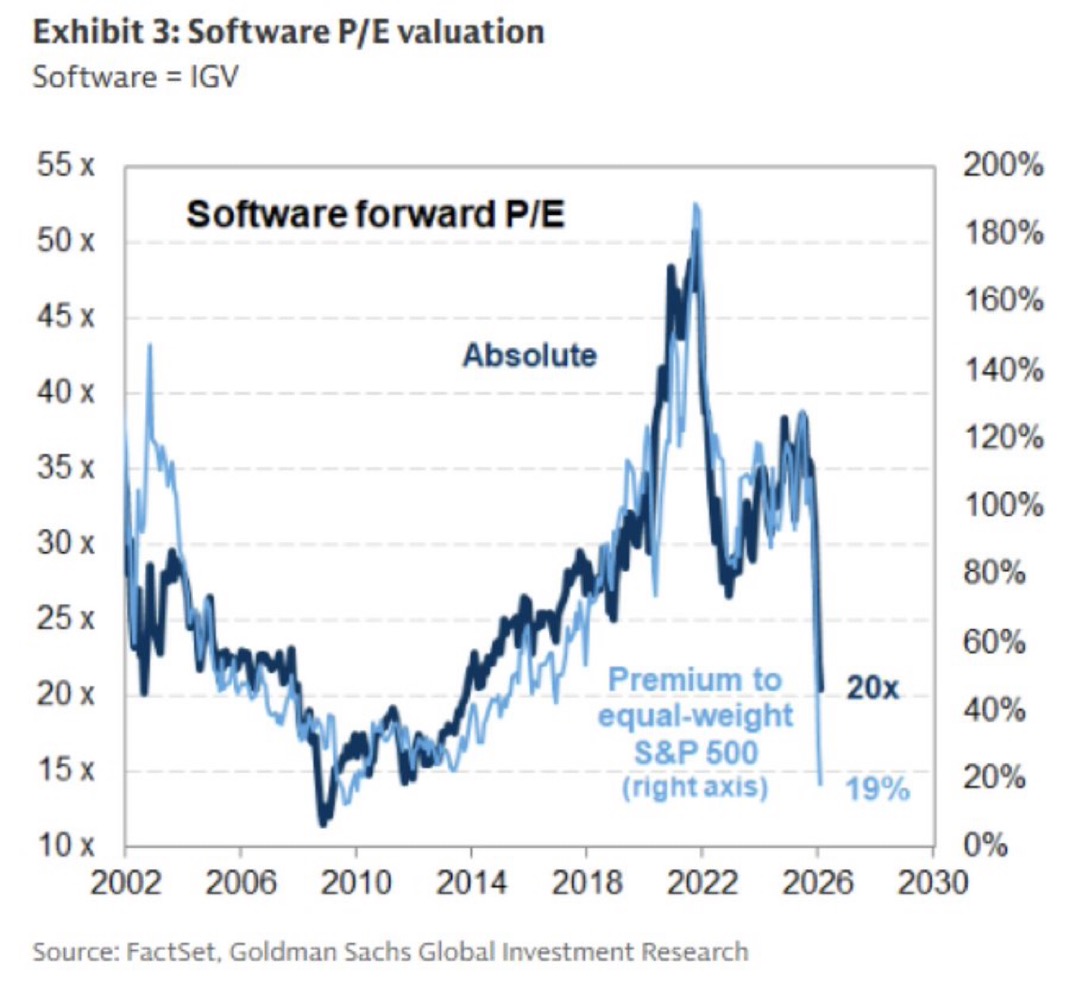
Over the last few months there’s been a marked Investor rotation out of growth companies (particularly technology/software and Small Cap Growth names) and into Resources/Materials (Gold) and defensive sectors like utilities, large financials and infrastructure.
For example the Small Resources index which was up +0.9% for the month and is up +88.2% over the past year, and outperforming the Small Industrials index by a record +87.1%. The Fund has negligible exposure to resources.
The TAMIM All Cap Fund finished the CY2025 on a run of 7 years of strong annual returns of 17.57% pa (net of fees). These returns are some of the best amongst our peers but it’s important to note they have not come without significant volatility over time and large drawdowns in most years, only to see the fund recover strongly each year.
The start to the CY2026 year has been dissapointing and reflects this market rotation detailed above, the strength in the resources sector, where we have little exposure and finally, the emerging narrative sentiment that AI presents an existential risk to Technology vendors and other industries.
We have recently wrote about this AI fear narrative and explained how we see AI as a productivity tool and a growth enabler for Tech vendors that embrace it and adapt. We believe the market sentiment is construed and over time will be proven wrong – thus creating buying opportunities. As we go to print the war in Iran brings additional market uncertainty to the frame.
It’s important to note that some of the Fund’s pullback is outside of our control, mainly the sentiment narrative driven largely by concerns about AI disruption – and not a broad deterioration in company fundamentals within the portfolio.
But we also take responsibility for what is under our control, and that’s picking the right companies that meet our fundamental based analysis and avoiding as much as possible, the companies that will dissapoint.
Unfortunately during the February reporting period we encountered 3 dissapointing downgrades and 2 other holdings that met our expectations, but the market did not respond well to the result. In a 30-35 stock portfolio – it is inevitable we get some wrong through the year – but a combination of the above has seen the poor performance during the month. We discuss these holdings further in the portfolio section of the report.
We have responded decisively by staying the course and exiting companies that have dissapointed, holding ones where we feel the market is wrong, and buying new holdings where we feel the aggressive selldown is overdone. The remainder of the portfolio delivered strong results and in many cases upgrades that at first saw sharp price rallies, only to eventually lose momentum.
Investors must remember that staying the course matters. Markets never move in a straight line and volatility is the price of admission of higher long-term returns. We also understand that periods like this can be uncomfortable for some investors, but they are a normal part of investing in small and mid cap growth companies.
We remain focused on high-quality businesses that meet our fundamental based approach of strategic industry positioning, founder led, growing financial metrics and strong balance sheets. More importantly we are looking to buy these companies at cheap valuations – and we are beginning to see attractive opportunities emerge from the current selloff.
We are looking forward to the next few months as we anticipate the Fund to bounce back. We also take this opportunity to remind investors that times like these have been the best opportunities to invest in our Funds over the last few years.
Finally we provide a brief commentary on portfolio updates during the month in the portfolio section of the report. We look forward to providing further updates in our next monthly report in April.
Sincerely yours,
Ron Shamgar and the TAMIM Team.
Fund Performance
Portfolio Highlights

Symal Group (ASX: SYL) delivered a strong 1H FY26 result, with normalised revenue surging 20.7% to $504.2 million, driven by market share gains and successful integration of acquisitions. Normalised EBITDA rose 6% to $51.4 million (margin 10.2%, within 10–12% target), while normalised NPAT increased 4% to $20.9 million. Robust 108% cash conversion highlights earnings quality, and a fully franked 3.3 cps interim dividend signals board confidence.
Positives include a $1.64 billion work-in-hand, $1.4 billion ECI pipeline, and diversification into resilient sectors like defence and data centres. However, margin compression from higher overheads to support expansion, plus no guidance upgrade (FY26 normalised EBITDA reaffirmed at $117–127 million, excluding recent deals), led to a sharp 22% share price drop on the day.
We view the selloff as an overreaction given the solid fundamentals and growth trajectory. SYL is a founder led business that is investing for the future rather than comprising to satisfy the market short term horizon. The recent acquisitions have not been included in the guidance and so we expect the company to materially upgrade guidance to over $140 million Ebitda once these settle. If the company can get back to some good newsflow the stock should re rate higher.
Bravura Solutions (ASX: BVS) delivered a strong 1H26 result, with an upgraded EBITDA of $37.9m driven by 9.8% revenue growth to beat expectations. Cash EBITDA surged 24.8% to $34.2m, while NPAT reached $25.8m, well ahead of forecasts, aided by FX gains and tax benefits. A special 4.46cps plus 5.77cps interim dividend far exceeded expectations, reflecting policy to distribute excess cash.
Guidance for FY26 was upgraded to $280–285m revenue, $69–73m Cash EBITDA, which implies stronger 2H momentum despite adverse FX. The new CEO has signalled a focus on M&A going forward.
We see BVS as undervalued at 12x cash Ebitda multiples with earnings upside and very limited AI threat as the software is highly embedded in client workflows and their clients base is very risk averse and requires their data to be secure. The stock initially rallied +30% post the result only to lose that momentum and finish slightly up for the month. We took the opportunity to add to our position during the recent AI driven market selloff.

Clearview (ASX: CVW) delivered a robust 1H26 result, showcasing strong momentum in its life insurance business amid a proposed takeover by Zurich. New business sales surged 29% to $21.0 million, driving in-force premiums up 13% to $436.0 million and gross premium revenue also rising 13% to $215.6 million. Claims remained stable with a 51% gross loss ratio, close to the long-term 52% average.
Earnings accelerated sharply: life insurance underlying NPAT jumped 59% to $24.1 million, while group underlying NPAT rose 77% to $22.1 million, lifting EPS 84% to 3.5 cents. The company maintains surplus capital and forecasts FY26 group underlying NPAT of $42–47 million (EPS 6.7–7.3 cents).
Concurrently, ClearView entered a Scheme Implementation Deed with Zurich for A$0.65 cash per share, plus potential fully franked dividend (up to ~2.14 cents franking credits). The board unanimously recommends the deal, backed by major shareholder Crescent Capital (53%). Subject to approvals, completion is eyed for Q3 2026, with a scheme meeting around mid-August.
While the offer crystallizes value at a modest 9.3x FY26 P/E and below embedded value estimates of 78–88 cents, we believe there’s a high likelihood CVW may attract competing bids at 70–75 cents. The takeover has placed CVW firmly “in play” and we now wait and see.
Fund Facts
Investment Parameters
| Management Style: | Active |
| Investments: | Australian Equities |
| Investment Universe: | Australian Small Cap |
| Reference Index: | ASX Small Ords |
| Number of Securities: | 20-40 (10-20 Value, 10-20 Growth) |
| Single Security Limit: | +/-5% |
| Market Capitalisation: | Small Cap |
| Leverage: | No |
| Portfolio Turnover: | <50% p.a. |
| Cash Level (typical): | 0-100% (0-50%) |
Fund Profile
| Investment Structure: | Unlisted Unit Trust (available to wholesale investors) |
| Minimum Investment: | $100,000 |
| Management Fee: | 1.25% p.a. |
| Admin & Expense Recovery: | Up to 0.35% |
| Performance Fee: | 20% of performance in excess of hurdle |
| Hurdle: | Greater of: RBA Cash Rate + 2.50% or 4% |
| Entry/Exit Fee: | Nil |
| Buy/Sell Spread: | +0.25% / -0.25% |
| Distributions: | Semi-annual |
| Applications/Redemptions: | Monthly |
| Redemptions: | Monthly with 30 days' notice |
| Investment Horizon: | 3 - 5 years + |

Invest via TAMIM Fund
Request additional details by using the form or if you're ready to invest select the apply now button.
Invest via IMA
The TAMIM Australia Small Cap strategy is available as an Individually Managed Account (IMA). Please see the Strategy Summary for terms or request Investment Documentation via form.